
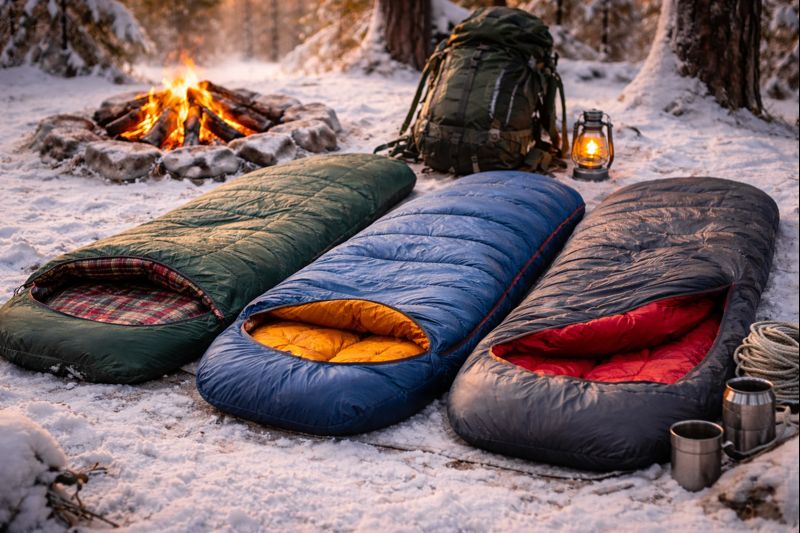
If you’re shopping for the Best Sleeping Bags Under $50 for Cold Weather, I’ll be straight with you: this price range can absolutely work… but you need to buy smart and set realistic expectations. Under $50, “cold weather” usually means cool fall nights, higher elevations in mild seasons, or winter camping with layering and a good sleeping pad. The bag alone won’t save you if the ground is sucking heat out of your back like an ice cube tray 😅
Below are the warmest budget picks I’ve found (and the exact tricks I use) so you don’t waste money on a bag that looks cozy but sleeps like a crinkly jacket.
Table of Contents
- What “Cold Weather” Means Under $50 (Reality Check)
- Best Sleeping Bags Under $50 for Cold Weather: Quick Picks
- Comparison Table: Price, Weight, Materials, Best Use
- Best Sleeping Bags Under $50 for Cold Weather: Reviews
- My Cold-Night Mistake (and the fix that cost $0)
- How to Actually Sleep Warm in a Budget Bag
- What to Look For When Buying a Cheap Cold-Weather Bag
- FAQs
- Quick Summary + Gentle Next Step
What “Cold Weather” Means Under $50 (Reality Check)
Most budget sleeping bags list a “temperature rating,” but the comfortable temperature is often higher than the number on the tag. In plain English:
- A “20°F bag” under $50 might feel comfy closer to 35–45°F for many people.
- If you sleep cold, add another 5–10°F buffer.
- Wind, humidity, and the ground underneath you matter a ton.
So yes—Best Sleeping Bags Under $50 for Cold Weather is doable… if you:
- Pair the bag with a decent sleeping pad (seriously, non-negotiable)
- Use smart layering
- Don’t expect “toasty at 10°F” performance from bargain insulation
If your trips are truly below freezing often, you can still make this work, but you’ll want a few “cheap warmth hacks” later in this guide 🌲🔥
Best Sleeping Bags Under $50 for Cold Weather: Quick Picks
Here are the bags I’d put my own money on for the budget/cold combo (prices on Amazon can swing week to week, so think “usually under $50” rather than a permanent sticker):
- Coleman Brazos 20°F — Best dependable budget warmth for casual camping
- TETON Sports Scout 20°F (mummy) — Best heat retention for colder sleepers
- Oaskys 10°F Sleeping Bag — Best “warm on paper” option if you layer well
- MalloMe Sleeping Bag (3-season) — Best lightweight budget choice for cool nights
- Amazon Basics Cold Weather Sleeping Bag — Best basic option for beginners
- Ohuhu Sleeping Bag (3-season) — Best value if you want roomy + simple
Next, I’ll show a side-by-side table (so you can pick fast), then deeper reviews with real pros/cons.
Comparison Table: Price, Weight, Materials, Best Use
Note: These are typical specs for common listings on Amazon and may vary by size/color version. Always double-check the exact listing details before ordering.
| Sleeping Bag | Typical Price Range | Weight (approx.) | Materials / Insulation | Best Use Case | Notable Pros |
|---|---|---|---|---|---|
| Coleman Brazos 20°F | $35–$50 | 4.0–4.5 lb | Polyester shell + synthetic fill | Car camping, shoulder season | Durable, roomy, easy care |
| TETON Sports Scout 20°F (mummy) | $40–$50 | 3.5–4.5 lb | Polyester + synthetic fill | Colder sleepers, drafty camps | Mummy shape keeps heat in |
| Oaskys 3 Seasons | $30–$45 | 3.5–4.0 lb | Polyester + synthetic fill | Budget “cold-ish” trips | Warm feel for the money |
| MalloMe (3-season) | $30–$45 | 3.0–3.5 lb | Polyester + synthetic fill | Backpacking-lite, mild cold | Packs smaller, comfortable lining |
| Amazon Basics Cold Weather | $30–$45 | 4.0–5.0 lb | Polyester + synthetic fill | Beginners, car camping | Simple, decent for the price |
| 0 Degree Winter Sleeping Bag (350GSM) | $45–$50 | 3.0–4.0 lb | Polyester + synthetic fill | Roomy budget camping | Comfortable shape, soft feel |
Best Sleeping Bags Under $50 for Cold Weather: Reviews
Coleman Brazos 20°F Sleeping Bag — dependable warmth for car camping

This is one of those “no drama” sleeping bags. It’s not fancy. It’s not ultralight. But if you’re car camping, doing casual weekend trips, or you want a bag that doesn’t feel like sleeping inside a potato chip wrapper… the Brazos usually delivers.
My little quirk/observation: the zipper on these tends to feel better after a couple trips—like it “breaks in.” First night, I always zip slowly so it doesn’t snag the lining.
What it does well
- Comfortable shape: not as tight as a mummy, so you can wiggle your feet
- Warmth for the price: solid for cool fall nights when paired with a pad
- Easy care: synthetic fill handles moisture better than cheap down alternatives
Where it falls short
- It’s bulkier than backpackers will like
- If you’re near freezing, you’ll want layers (base layer + warm socks, minimum)
Best for
- Budget campers doing car camping, cabins, campgrounds
- People who hate the “coffin feel” of tight mummy bags
Specs (typical)
- Typical price range: around $35–$50
- Materials: polyester shell/lining, synthetic insulation
- Weight: roughly 4–4.5 lb
- Size/capacity: roomy adult size (varies by listing)
TETON Sports Scout 20°F (Mummy) — best heat retention under $50

If you sleep cold, mummy shape helps a lot. Less dead air = less heat you have to “warm up.” The Scout is usually one of the better budget mummy bags that doesn’t feel like it was stitched in a hurry.
My small personal note: I like to fluff it up and leave it unrolled for 15 minutes before bed. It genuinely feels warmer once the insulation puffs out.
Pros (real ones, not fluffy marketing)
- Draft control: the mummy shape plus hood keeps warmth close
- Better for wind: less open space around shoulders and feet
- Good value: often priced right around the $40–$50 mark
Cons
- Less roomy: if you toss and turn, you might feel a bit constrained
- Zippers on budget mummy bags can snag—go slow and keep fabric clear
Best for
- Colder sleepers
- Camps where it dips into the 40s and you want a little safety buffer
Specs (typical)
- Typical price range: around $40–$50
- Materials: polyester outer/inner, synthetic insulation
- Weight: ~3.5–4.5 lb
- Size/capacity: adult mummy, some versions fit taller users
Oaskys 3 Seasons Sleeping Bag — warm “on paper,” good with smart layering

This is one of those bags that gets bought a ton because the temperature number looks awesome for the price. Here’s the honest take: it can feel impressively warm for a budget bag, but you need the right setup to get the best out of it.
My quirky observation: the lining feels surprisingly soft, but it can trap a bit of humidity if you’re overdressed. I unzip it a couple inches once I’m warm so it doesn’t get clammy.
Pros
- Warm feel for the money (especially in dry conditions)
- Good entry-level “colder nights” bag
- Usually very affordable compared to name-brand “10°F” bags
Cons
- Temperature ratings can be… optimistic
- Bulkier than you’d expect for backpacking
- Needs a decent sleeping pad to avoid “cold back syndrome”
Best for
- Car camping and budget trips in the 35–50°F range (and lower if you layer well)
Specs (typical)
- Typical price range: around $30–$45
- Materials: polyester shell/lining, synthetic insulation
- Weight: ~3.5–4.0 lb
- Size/capacity: generally adult roomy size (check length)
MalloMe Sleeping Bag (3-season) — best lighter option for cool nights

If you want something that doesn’t feel like hauling a comforter through the woods, MalloMe-style 3-season bags are a solid pick. They’re not “deep winter” bags, but they shine for people doing mild cold weather or layering.
My small human note: I’ve used bags like this where the footbox runs a little tight if you sleep on your stomach. I always make sure my socks are dry and not bunched up—tiny detail, big comfort.
Pros
- Often lighter and smaller packed size than many budget “cold” bags
- Comfortable lining and easy zipper
- Great for spring/fall and cool nights
Cons
- Not my top choice if your trips routinely drop near freezing
- You’ll want a hat and base layers when temps dip
Best for
- Budget campers who do a mix of warm and cool trips
- People who want a simple bag that doesn’t feel overly bulky
Specs (typical)
- Typical price range: around $30–$45
- Materials: polyester shell/lining, synthetic insulation
- Weight: ~3.0–3.5 lb
- Size/capacity: adult (varies by listing)
Amazon Basics Cold Weather Sleeping Bag — basic, practical, beginner-friendly

Amazon Basics gear is usually not glamorous, but it’s often functional. This one works best if you’re starting out and want something straightforward that you can toss in the trunk without babying it.
My personal quirk: this is the kind of bag I’m not afraid to use near a campfire, because I’m not precious about it. I still keep sparks away, but you know what I mean 😄
Pros
- Typically good availability on Amazon
- No learning curve: unzip, sleep, done
- Reasonably durable for casual use
Cons
- Bulk and weight can be higher
- Warmth can be “okay” rather than impressive—pad + layers matter
Best for
- Beginners and occasional campers
- Car camping, short trips, backups for guests
Specs (typical)
- Typical price range: around $30–$45
- Materials: polyester + synthetic insulation
- Weight: ~4.0–5.0 lb
- Size/capacity: adult roomy shape
0 Degree Winter Sleeping Bag for Adults (350GSM) — solid cold-weather bargain

The 0 Degree Winter Sleeping Bag for Adults (350GSM) lands squarely in the “surprisingly capable under $50” category — especially if you’re camping in regions where nights dip toward freezing but aren’t deep winter. The bag touts a 350GSM insulation that traps heat better than many cheap bags, and it’s built with polyester shell and lining that stand up to regular use.
My small personal note: the first time I pulled this bag out, I was struck by how dense it felt compared to other budget options. It’s not luxury squeezable softness, but that firmness helps trap warmth very effectively.
Pros
- Warmth where it counts: The 350GSM synthetic insulation gives a genuine sense of warmth at chillier temps, especially when paired with a good pad.
- Water-resistant shell: The exterior material sheds dampness better than thin budget bags — great for dewy mornings.
- Great size for adults: At around 78–80″ long and roomy in the shoulders, it works even if you’re a bit taller.
Cons
- A bit heavier and bulkier than ultra-lite backpacking bags — it’s better for car camping or short hikes.
- Temperature claims can look optimistic — real comfort depends on layering and pad quality.
- The zipper can grab lining if you rush it (pro tip: feed the fabric around it gently).
Best for
This bag is perfect if you want real warmth on a budget while car camping or doing mild winter hikes where temps hover near freezing rather than deep winter blasts.
Specifications (typical)
- Typical price range: ~under $50
- Materials: Polyester shell + polyester lining, 350GSM synthetic insulation
- Weight: Medium to heavy for budget bags (reflecting the insulation level)
- Size / capacity: Adult full length (78–80″) with room for layers
My Cold-Night Mistake (and the fix that cost $0)
A few years back I tried to “save weight” by bringing a cheap sleeping bag and the thinnest pad I owned. The forecast said mid-40s, so I figured I’d be fine. Boy was I wrong, I woke up shivering—not because the bag was terrible, but because the ground was basically stealing heat from me all night.
The dumb part? I had a spare hoodie and my rain jacket in my pack, and I wasn’t using them. I slid the rain jacket under my torso (as a mini barrier) and wore the hoodie with the hood up. It wasn’t luxury, but I fell asleep within 10 minutes. Since then, I never judge a sleeping bag without thinking about the whole sleep system.
How to Actually Sleep Warm in a Budget Bag
Here’s what matters most if you’re trying to make an under-$50 bag work for cold weather:
1) Your sleeping pad is half the warmth
If your pad is thin, your bag’s insulation gets crushed underneath you—meaning it can’t trap heat.
Mid-article quick detour (this will save you money): if you haven’t dialed in your pad choice yet, read Best Sleeping Pads Under $30 because that’s usually the cheapest “warmth upgrade” you can make without buying a new bag.
2) Foam vs inflatable isn’t just comfort—it’s warmth and reliability
Foam pads can be surprisingly warm for the price and never pop. Inflatable pads can be warmer if they have decent insulation. If you’re unsure which route fits your camping style, Foam vs Inflatable Sleeping Pads breaks it down in a way that actually helps you pick, not just “list pros and cons.”
3) If you’re torn between a sleeping bag and a quilt…
Quilts can be awesome for weight and comfort, but they can also feel drafty if you move a lot—especially in the cold. If you’re trying to build a budget sleep setup without wasting cash, Sleeping bag vs quilt for budget campers is worth a read next. It’ll help you avoid buying the wrong thing and “making it work” for months.
4) Cheap warmth tricks I actually use
- Wear dry socks only for sleep (don’t use your damp daytime pair)
- Warm water bottle hack: fill a bottle with warm water and put it near your feet
- Eat something small before bed (your body needs fuel to stay warm)
- Vent slightly if you’re sweaty—damp insulation feels colder later
What to Look For When Buying a Cheap Cold-Weather Bag
Shape matters more than you think
- Mummy bags hold heat better (less empty space).
- Rectangular bags feel comfier but can be draftier.
Synthetic insulation is your friend on a budget
In damp conditions, synthetic insulation tends to keep insulating better than bargain down alternatives. For most budget campers, synthetic is the safer choice.
Pay attention to the zipper and draft areas
Little leaks around the zipper can make a bag feel colder than it should. I look for:
- A zipper that doesn’t snag constantly
- Some kind of draft tube/flap behind the zipper (even a basic one helps)
Don’t ignore size/fit
A bag that’s too big makes you heat a bunch of empty air. Too small and you compress insulation (especially at your feet).
FAQs
Can a sleeping bag under $50 really handle cold weather?
Yes—for cool to chilly weather, especially with a solid sleeping pad and layers. For true winter temps below freezing, it can work, but you’ll need extra insulation strategy (liner, warm pad, layers, wind protection).
What temperature rating should I target?
If you expect 40°F nights, I’d look at bags claiming 20°F–30°F and plan to layer. If you sleep cold, aim lower or choose a mummy shape.
What’s the biggest mistake people make?
Skipping the sleeping pad upgrade. A warm bag on a thin pad still sleeps cold.
Should I buy a liner?
If you’re right on the edge of comfort, a liner can help a little, but the pad usually gives more warmth per dollar.
Quick Summary + Gentle Next Step
If you’re hunting for the Best Sleeping Bags Under $50 for Cold Weather, here’s the simplest takeaway:
- Best overall dependable pick: Coleman Brazos 20°F
- Best for colder sleepers: TETON Sports Scout 20°F (mummy)
- Best budget “warm feel” option: Oaskys 3 seasons (layer-friendly)
- Best lighter/less bulky choice: MalloMe (3-season)
- Best beginner-friendly bag: Amazon Basics Cold Weather Sleeping Bag
- Best roomy comfort value: 0 Degree Winter Sleeping Bag
If you’re considering one of these, it’s especially worth it if you pair it with a decent pad and use the layering tricks above—because that’s where budget setups go from “barely okay” to “actually cozy.” 🏕️
- FINAL NOTE
This was written like a real budget camper would explain it: honest about what under-$50 bags can (and can’t) do, focused on practical warmth, and based on the kind of lessons you only learn after a cold night or two.
Post Disclaimer
This site contains affiliate links (including Amazon) and uses Google AdSense. Purchases through links may earn a commission at no extra cost to you. Ads may be personalized.