
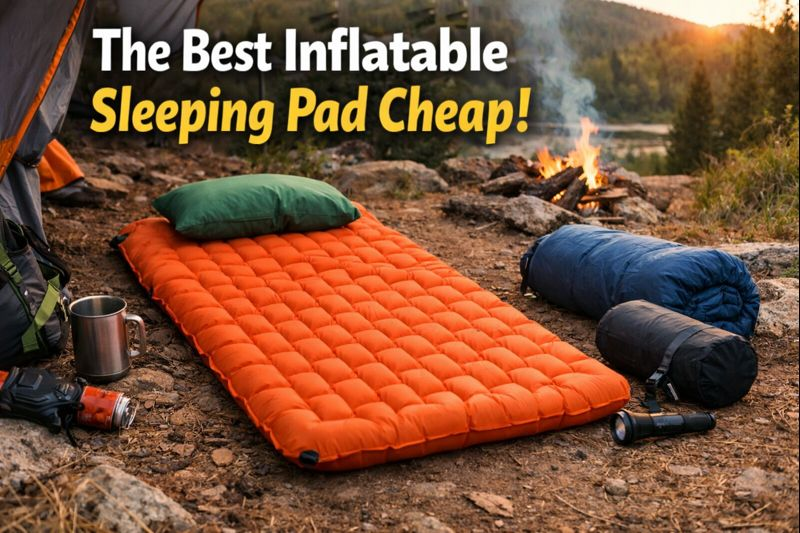
Finding the Best inflatable sleeping pad cheap sounds simple until you actually spend a night sleeping on the wrong one. I’ve been there—lying awake at 2 a.m., feeling every rock under my tent, wishing I’d done a bit more homework before buying whatever was cheapest at the time.
What I learned pretty quickly is that not all inflatable sleep gear is the same. Some campers swear by inflatable sleeping pads because they’re lightweight and easy to pack. Others prefer full inflatable air mattresses for that almost-at-home comfort, especially when car camping. I’ve used both over the years, and each has its place depending on how you camp.
This guide focuses on affordable inflatable sleeping pads that make sense if you’re backpacking, hiking in, or just trying to keep your gear light and compact. If you’re more interested in thicker, bed-style comfort for car camping, I also put together a separate breakdown in The Ultimate Best Cheap Air Mattress For Camping that’s worth checking out before you buy.
Either way, sleeping well outdoors matters more than most people realize. Below, I’ll walk through what actually makes a good budget inflatable sleeping pad, which cheap options are worth your money, and how to avoid the common mistakes that can ruin a night under the stars.
Table of Contents
- Why an inflatable sleeping pad matters
- My real-world experience with cheap sleeping pads
- What to look for in a budget inflatable pad
- Best inflatable sleeping pad cheap (top picks)
- Comparison table
- How to choose the right one for your trip
- Common mistakes to avoid
- Final thoughts and recommendations
Why an inflatable sleeping pad actually matters
A sleeping pad does more than add softness. It protects you from heat loss, uneven ground, and pressure points that can ruin a trip fast. Even in warm climates, the ground pulls heat from your body more than most people expect.
An inflatable pad, compared to foam, offers:
- Better comfort for side sleepers
- Smaller packed size
- Adjustable firmness
- Usually better insulation per inch
The trick is finding a cheap inflatable pad that doesn’t leak, flatten overnight, or sound like a bag of chips every time you move.
My experience testing budget sleeping pads
On one of my first solo budget camping trips, I bought the cheapest inflatable pad I could find locally. No brand I recognized, super thin, and it felt fine… for about 20 minutes. By 2 a.m., I was half on the ground, cold, and annoyed. I learned pretty quick that “cheap” and “bad” aren’t the same thing—but you have to know where the line is.
Since then, I’ve used budget pads on weekend trips, car camping, and even lightweight backpacking. Some held up shockingly well. Others didn’t make it past a single trip. What I noticed is that price matters less than design, valve quality, and materials.
What to look for in a budget inflatable sleeping pad
Before buying the Best inflatable sleeping pad cheap, focus on these key features instead of marketing buzzwords.
Thickness (sweet spot: 2–3 inches)
Anything under 2 inches usually feels the ground. Over 3 inches is nice but often heavier and more expensive.
R-value (even for warm camping)
If you camp on dirt or rock, aim for at least R-2. You’ll sleep warmer, even in summer.
Weight and pack size
For backpacking, under 1.5 lbs is ideal. For car camping, weight matters less.
Valve quality
Cheap valves fail more often than fabric. Look for flat or dual-function valves.
Noise
Some inflatable pads crinkle loudly. Not a deal-breaker, but it can get old fast.
Best inflatable sleeping pad cheap – Top picks
Below are the best-performing affordable inflatable sleeping pads I’ve found that consistently deliver comfort without blowing the budget.
1. Sleepingo Camping Sleeping Pad

Amazon link:
Sleepingo Camping Sleeping Pad Deal Here! $36.99
This pad is a solid all-around choice and one I’ve personally used more than once.
Pros
- Lightweight (around 14 oz)
- Durable ripstop nylon
- Packs very small
- Easy inflation
Cons
- Narrow for bigger sleepers
- Not ideal for cold weather
Best for:
Backpackers and minimalist campers who want comfort without bulk.
I was surprised how firm this pad felt for its size. It doesn’t feel luxurious, but it does the job well, especially for short trips.
2. Klymit Static V Sleeping Pad

Amazon link:
Klymit Static V Sleeping Pad! $48.90
This is one of the most popular budget inflatable pads for a reason.
Pros
- V-shaped design reduces pressure points
- Good balance of comfort and weight
- Durable for repeated use
Cons
- Slightly noisy
- Valve takes a bit getting used to
Best for:
Side sleepers and campers who move a lot at night.
The first time I used this pad, I noticed my hips didn’t sink as much as usual. It’s not perfect, but it’s very consistent.
3. Intex Inflatable Camping Sleeping Pad

Amazon link:
Intex Inflatable Camping Sleeping Pad Deal Here! $46.99
This one leans more toward car camping than backpacking.
Pros
- Very affordable
- Thick and comfortable
- Easy to inflate
Cons
- Heavy and bulky
- Not great for hiking trips
Best for:
Car campers or occasional campers who want max comfort for low cost.
If you’re driving to your campsite and don’t care about weight, this is a comfortable option that feels closer to an air mattress.
4. Lightspeed Outdoors Self-Inflating Pad

Amazon link:
Lightspeed Outdoors Self-Inflating Pad Deal Here! $67.99
A hybrid option that combines foam and air.
Pros
- Better insulation
- Quiet when moving
- Comfortable for longer trips
Cons
- Heavier than air-only pads
- Takes longer to pack
Best for:
Campers who want warmth and comfort without spending a lot.
This pad feels more “bed-like” than most inflatables, which I appreciated on multi-night trips.
Comparison table
| Sleeping Pad | Weight | Thickness | Best Use |
|---|---|---|---|
| Sleepingo | ~14 oz | 2 inches | Backpacking |
| Klymit Static V | ~18 oz | 2.5 inches | Side sleepers |
| Intex Pad | ~3 lbs | 3+ inches | Car camping |
| Lightspeed | ~2.5 lbs | 3 inches | Cold nights |
Why the Lightspeed Outdoors pad is my personal favorite
If I had to pick just one pad from this list for my own trips, it would be the Lightspeed Outdoors Self-Inflating Pad—and not because it’s the fanciest or the most expensive.
What I like most about it is how forgiving it feels. After a long day hiking or setting up camp, I don’t want to mess around trying to get the air pressure perfect. With this pad, I just unroll it, let it do its thing, and add a couple of breaths if needed. It’s simple, and that matters more than people realize when you’re tired.
I also sleep better on it than on most air-only pads. It feels more stable under my hips and shoulders, especially when I roll onto my side. On cheaper inflatable pads, I sometimes wake up feeling like I’m balancing on a balloon. That hasn’t really happened with the Lightspeed pad, even on uneven ground.
Another thing I appreciate is how quiet it is. I move around a bit at night, and some inflatable pads make a lot of noise every time you shift. This one stays pretty calm, which makes a bigger difference than I expected, especially when camping with others.
It’s not the lightest option here, and I wouldn’t take it on an ultralight backpacking trip. But for weekend camping, road trips, or anywhere I’m not counting every ounce, it’s the pad I keep reaching for. Comfort, warmth, and ease of use just hit the right balance for me.
How to choose the right pad for your trip
Choosing the Best inflatable sleeping pad cheap depends on how you camp.
Backpacking
- Prioritize weight and pack size
- Accept slightly less thickness
- Durability matters more than plushness
Car camping
- Thickness and comfort come first
- Weight doesn’t matter much
- Noise is less of an issue
Side sleepers
- Look for pads over 2.5 inches thick
- Structured designs help reduce hip pressure
Common mistakes to avoid
I’ve seen (and made) these mistakes more than once.
- Buying the thinnest pad to save money
- Ignoring R-value completely
- Not testing inflation at home
- Over-tightening valves (causes leaks)
One small tip: always bring a patch kit. Even good pads can get punctured.
Inflatable sleeping pad vs inflatable air mattress (what’s the real difference?)
This is one of the most common questions I get asked, and honestly, I was confused about it myself when I first started camping on a budget.
An inflatable sleeping pad and an inflatable air mattress may look similar at first glance, but they’re designed for very different types of camping.
Inflatable sleeping pads (what this article focuses on)
Inflatable sleeping pads are built for portability and efficiency.
They are:
- Thin and lightweight
- Easy to pack into a backpack
- Designed to insulate you from the ground
- Meant for tents, backpacking, and minimalist camping
Sleeping pads typically range from 2–3 inches thick, which doesn’t sound like much, but the internal design helps spread your weight evenly. When I switched from a basic foam pad to an inflatable sleeping pad, the difference was immediate—less pressure on my hips and shoulders, and way less heat loss overnight.
They’re ideal if:
- You hike to your campsite
- You want to save space and weight
- You camp solo or travel light
Inflatable air mattresses (a different kind of comfort)
Inflatable air mattresses are closer to what you’d use at home for guests.
They are:
- Thicker and more plush
- Much heavier and bulkier
- Designed mainly for car camping or indoor use
- Less focused on insulation
If you’re driving right up to your campsite and comfort is your top priority, an air mattress can feel almost bed-like. I’ve used them on car camping trips and slept great—but there’s no way I’d want to carry one on a trail.
If you’re leaning more toward that style of camping, I break it down in detail in my other guide:
👉 The Ultimate Best Cheap Air Mattress For Camping
That article compares budget-friendly air mattresses specifically made for camping and helps decide if that extra comfort is worth the added bulk.
Quick rule of thumb
- Backpacking or lightweight camping → inflatable sleeping pad
- Car camping or base camps → inflatable air mattress
Both have their place. The key is matching the gear to how you actually camp, not just what looks more comfortable online.
Final thoughts
You don’t need to overspend to sleep well outdoors. The Best inflatable sleeping pad cheap is really about matching the pad to how you camp, not chasing the lowest price tag. A well-chosen budget pad can last years and dramatically improve your camping experience.
If you’re considering upgrading your sleep setup or planning your first overnight trip, any of the pads above are a solid place to start. Comfort matters more than people admit, and a good night’s sleep makes everything else better.
Post Disclaimer
This site contains affiliate links (including Amazon) and uses Google AdSense. Purchases through links may earn a commission at no extra cost to you. Ads may be personalized.