
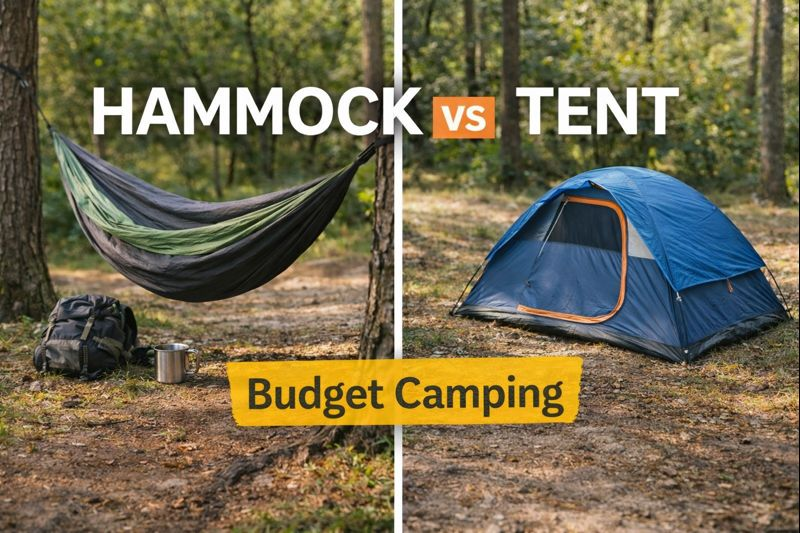
If you’re deciding between a hammock vs tent for budget camping, you’re not alone. This debate pops up every time camping season rolls around. Tents feel traditional, secure, and familiar — while hammocks are lightweight, comfy, and often cheaper for solo trips. Both work great, but they serve different styles of camping, and that’s where most people get stuck.
In this guide, we’ll break down cost, comfort, weight, warmth, and practicality. I’ll even share a quick personal story of when I switched from tent camping to a hammock — and why I almost regretted it on night one 😅.
But first, here’s a quick navigation:
📌 Table of Contents
- Why This Debate Matters on a Budget
- Hammock vs Tent for Budget Camping – Key Differences
- My First Real Hammock Camping Experience (Short Story)
- Pros & Cons of Hammocks
- Pros & Cons of Tents
- Gear Recommendations (Affordable Options)
- Cost & Feature Comparison Table
- Which Setup Is Best for You?
- Final Thoughts
🔥 Why the Hammock vs Tent Debate Matters
When money is tight, every piece of gear needs to pull its weight — literally and financially. A solid tent can last years, but so can a hammock if you choose right. The tricky part? One shines in certain environments more than the other.
- Hammocks = lightweight, relaxing, great airflow
- Tents = better privacy, warmth, weather protection
Choosing smart saves cash and headaches down the line.
🥊 Hammock vs Tent for Budget Camping – Quick Breakdown
| Category | Hammock | Tent |
|---|---|---|
| Comfort | Floating sleep, no pressure points | Flat sleeping surface |
| Cost | Often cheaper for solo | More expensive baseline |
| Weather | Needs tarp/underquilt in cold | Naturally sheltered |
| Privacy | Low | High |
| Weight | Very light | Heavier |
| Best for | Minimalist + warm weather | Multi-season camping |
💬 My First Hammock Camping Experience
Several years ago, I planned a weekend trip with a lightweight setup. I swapped my old 2-person tent for a hammock to reduce the weight in my pack. First night? Beautiful. Stars visible through the trees, breeze on my face — pure magic.
But around 3 AM, things changed. I woke up cold, even though the air wasn’t that chilly. I didn’t know hammocks allow air to pass below you, pulling heat away. Rookie mistake 😆.
Next morning, I fixed it with a cheap foam pad under my back and instantly slept better the second night. Lesson learned: hammocks need insulation, even in mild weather.
That trip made me appreciate tents and hammocks differently — both have strengths.
🌿 Hammock Camping – Pros, Cons & When It’s Best
Hammocks shine for hikers, warm climates, and quick set-ups. They’re surprisingly comfortable if hung right.
⭐ Pros
- Super lightweight & compact
- No sleeping on rocks or uneven ground
- Great airflow in summer
- Relaxing swaying feel
❗ Cons
- Cold without under insulation
- Limited comfort for side sleepers
- Requires trees or anchor points
Who Hammocks Are Best For
Backpackers, solo trips, summer camping, forest or jungle terrain.
🏕️ Tent Camping – Pros, Cons & When It Wins
Tents are the traditional go-to. They excel in colder climates and family scenarios.
⭐ Pros
- Private and fully enclosed
- Better for rain, storms & bugs
- More room for gear
- Great for 2+ campers
❗ Cons
- Heavier and bulkier
- Takes longer to set up
- Can get hot and stuffy inside
Who Tents Are Best For
Couples, families, cold weather trips, open fields where trees are scarce.
💸 Budget Gear Recommendations
Here are affordable options depending on which setup you choose. Prices are approximate at time of writing in a natural way (not exact figures):
1. Budget Hammock Option
If your goal is to start cheap and light, a parachute nylon hammock does wonders. Many solid ones cost just around the low 30s–40s range depending on size and color.
Specs & Highlights
- Material: Parachute nylon
- Weight: Typically under 2 lbs
- Capacity: 350–500lbs depending on brand
- Best for lightweight hikers & warm weather trips
Pros
- Fast setup
- Packs tiny
- Breathable fabric
Cons
- Requires insulation in cold
- Needs trees to hang
2. Budget Tent Option
A compact backpacking tent usually sits around the mid 60s–100 price range for entry-level models.
Specs & Highlights
- Material: Polyester shell
- Weight: ~3–5 lbs
- Capacity: 1–2 person options
- Best for 3-season camping
Pros
- Weather-resistant
- Comfortable for winter nights
- More room for gear
Cons
- Bulkier and heavier
- Setup time is longer
🪢 More In-Depth Gear Guides You Might Like
If you’re leaning toward hammocks, I shared my top picks here — they’re affordable and perfect for beginners. And if tents are more your style, this comparison might help with shopping.
In case you want to look at budget hammock models, I’ve compared the best ones based on durability, comfort and pack weight here: The best hammocks for camping!
Or if a budget tent under $100 sounds better for your trips, this write-up breaks down real-world performance and what matters most when buying cheap: The Best Budget Tents!
These guides expand deeper while keeping things affordable.
📊 Cost & Practicality Comparison Table
| Feature | Hammock | Tent |
|---|---|---|
| Avg cost (budget gear) | lower — great value for solo | more expensive baseline |
| Best climate | warm + breezy | cooler seasons |
| Comfort | great if you like floating feel | predictable sleep surface |
| Setup | very fast | more steps |
| Weight | lighter | heavier |
| Space | limited | roomy enough for gear |
🧭 Which One Should You Choose?
Choose a hammock if:
- You camp in warm climates
- You want ultralight gear
- You love minimalist camping
- You mostly camp solo
Choose a tent if:
- You expect wind, storms, cold
- You prefer privacy
- You camp with a partner
- You want room to move around
🌄 Final Thoughts
So between a hammock vs tent for budget camping, the answer really depends on your style. Hammocks feel relaxing and airy — ideal for summer backpacking. Tents offer certainty, warmth, and protection — especially if you expect rough weather.
If you’re considering saving weight and cost, a hammock setup is fun to try. If comfort, privacy, and reliability matter more, tents remain a solid choice.
Either way, budget camping is about enjoying the outdoors — without draining your wallet.
Post Disclaimer
This site contains affiliate links (including Amazon) and uses Google AdSense. Purchases through links may earn a commission at no extra cost to you. Ads may be personalized.