
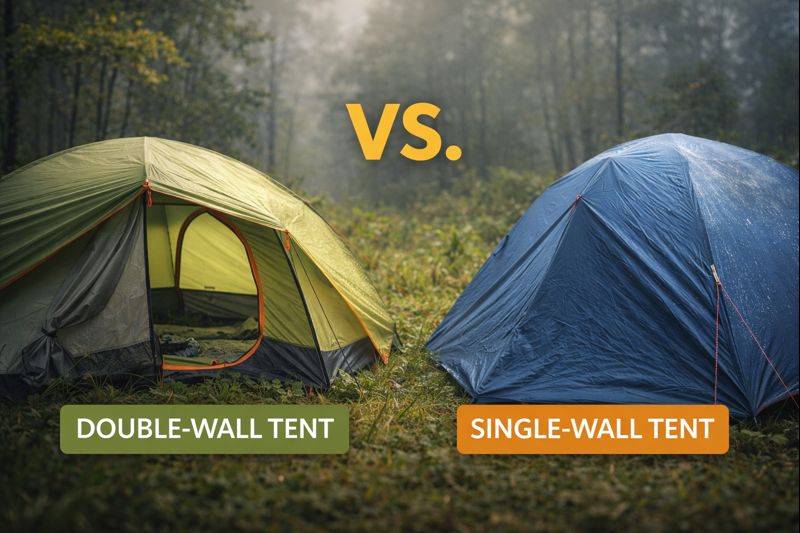
If you’ve ever stood in an outdoor store staring at tent labels and wondering what single-wall or double-wall actually means, you’re not alone. This double-wall vs single-wall tent guide breaks it all down in plain language, without the marketing fluff. I’ve camped in both styles over the years—sometimes happily, sometimes waking up damp and annoyed—and the differences matter more than most people realize.
In the first 100 words alone, it’s worth saying this clearly: choosing between a single-wall and double-wall tent isn’t about which is “better,” it’s about where, how, and how often you camp. Once you understand that, the decision gets much easier.
Let’s dig in 🏕️
Table of Contents
- What single-wall and double-wall tents actually are
- Key structural differences explained simply
- Double-wall vs single-wall tent guide: condensation comparison
- Weight, pack size, and setup differences
- Weather performance: rain, wind, and cold
- Comfort, livability, and long-term use
- Real-world mistakes I made (and what I learned)
- Budget considerations and smart buying tips
- Comparison table: side-by-side breakdown
- Final thoughts and who each style is best for
What is a single-wall tent?
A single-wall tent uses one layer of fabric to do everything:
- Keep rain out
- Block wind
- Contain warmth
- Manage condensation
There’s no separate inner tent and rainfly. What you see is what you get.
Single-wall tents are common in:
- Ultralight backpacking
- Mountaineering
- Minimalist setups
They’re often made from waterproof-breathable fabrics or treated nylon.
What is a double-wall tent?
A double-wall tent uses two layers:
- An inner tent (usually mesh or breathable fabric)
- A separate rainfly on the outside
This creates a small air gap between layers, which plays a big role in comfort and moisture control.

Double-wall tents are most common for:
- Car camping
- Budget backpacking
- Beginner and casual campers
If you’ve ever used a standard dome tent, chances are it was double-wall.
Double-wall vs single-wall tent guide: the real condensation difference
This is where things get very real, very fast.
Single-wall condensation reality
In my experience, single-wall tents are far more sensitive to conditions. Your breath, body heat, and humidity all hit the same surface. When temperatures drop, moisture has nowhere to go.
What I noticed:
- Walls felt damp by morning
- Sleeping bag brushed condensation easily
- Vent placement mattered a lot
Double-wall condensation advantage
Double-wall tents don’t magically remove moisture, but they manage it better.
Why:
- Moisture passes through the inner wall
- Condensation forms on the rainfly instead
- Drips are less likely to land on you
For most people, especially beginners, this difference alone makes double-wall tents easier to live with.
Look no further than here if you wan to learn, how to stop condensation in a tent (especially a cheap one).
Weight and pack size: not as dramatic as you think
Single-wall tents are usually lighter, but the gap isn’t always huge—especially in budget models.
Single-wall tents
- Lighter overall
- Fewer components
- Smaller packed size
Double-wall tents
- Slightly heavier
- More poles and fabric
- Still manageable for backpacking
I’ve shaved ounces before and regretted it later when comfort suffered. For short trips, the weight difference rarely justifies the trade-offs.
Setup and ease of use
Single-wall setup
- Faster pitch (often)
- Fewer parts
- Less forgiving if rushed
In bad weather, pitching a single-wall tent can be tricky because everything is exposed during setup.
Double-wall setup
- Slightly more steps
- Inner tent stays dry while fly goes on
- More flexible in rain
For beginners or tired campers, double-wall tents tend to be less stressful.
Weather performance: rain, wind, and cold
Rain
Double-wall tents handle prolonged rain better because:
- Water doesn’t sit directly against your sleeping space
- Fly tension can be adjusted separately
Single-wall tents can perform well, but only with good ventilation and proper fabric.
Wind
Single-wall tents are often more aerodynamic, which helps in exposed environments.
Double-wall tents can flap more, but good guying fixes most of that.
Cold
Cold weather is where single-wall tents can shine—if they’re designed for it. Mountaineering tents do well here.
Budget single-wall tents? Not so much.
Comfort and livability over time
This is the part most spec sheets ignore.
Double-wall tents feel:
- Less claustrophobic
- More forgiving with wet gear
- Better for longer trips
Single-wall tents feel:
- More minimal
- More sensitive to small mistakes
- Fine for skilled users, less so for casual campers
After three nights in a row, these differences really add up.
A quick personal lesson I learned the hard way
On one solo trip, I chose a lightweight single-wall tent to save space. Night one was fine. Night two brought humidity and cooler temps. By morning, the inside walls were soaked, and I had to carefully pack everything to avoid wetting my gear.
That trip taught me something simple: the best tent is the one that lets you sleep without worrying about it. For me, most of the time, that’s a double-wall tent.
Budget considerations: where most people land
If you’re shopping on a tight budget, double-wall tents usually offer better value per dollar.
They:
- Hide design flaws better
- Handle varied conditions more gracefully
- Are easier to resell or reuse
If you’re comparing affordable options and want to see how different designs stack up in real-world use, I’d recommend checking out [Best Budget Backpacking Tents Under $100]. It’s a helpful next step if you’re still narrowing things down and want to see how these concepts play out in actual models.
Double-wall vs single-wall tent guide: side-by-side comparison
| Feature | Single-Wall Tent | Double-Wall Tent |
|---|---|---|
| Weight | Lighter | Slightly heavier |
| Condensation control | More challenging | Easier to manage |
| Setup difficulty | Fast but unforgiving | Slightly slower, more forgiving |
| Weather versatility | Best in specific conditions | Better all-around |
| Beginner-friendly | Not ideal | Very beginner-friendly |
| Comfort over multiple nights | Limited | Much better |
| Typical price range | Moderate to high | Wide, budget-friendly |
Who should choose a single-wall tent?
Single-wall tents make sense if you:
- Prioritize weight above all else
- Camp in cold, dry environments
- Have experience managing ventilation
- Don’t mind a bit of moisture risk
They’re tools, not compromises—but only in the right hands.
Who should choose a double-wall tent?
Double-wall tents are ideal if you:
- Camp in mixed or humid conditions
- Want easier condensation control
- Are new to camping or backpacking
- Value comfort over shaving ounces
For most people, this is the safer, more enjoyable choice.
Final thoughts: choosing the right tent style
At the end of the day, this double-wall vs single-wall tent guide isn’t about convincing you one style is superior. It’s about matching the tent to your camping style, budget, and patience level.
If you’re considering longer trips, unpredictable weather, or just want fewer things to worry about at night, a double-wall tent is especially worth it. If you’re dialing in a lightweight system and know what you’re doing, single-wall tents can be incredibly efficient.
Either way, understanding the trade-offs now saves frustration later—and that’s always a win 🌲
Post Disclaimer
This site contains affiliate links (including Amazon) and uses Google AdSense. Purchases through links may earn a commission at no extra cost to you. Ads may be personalized.