
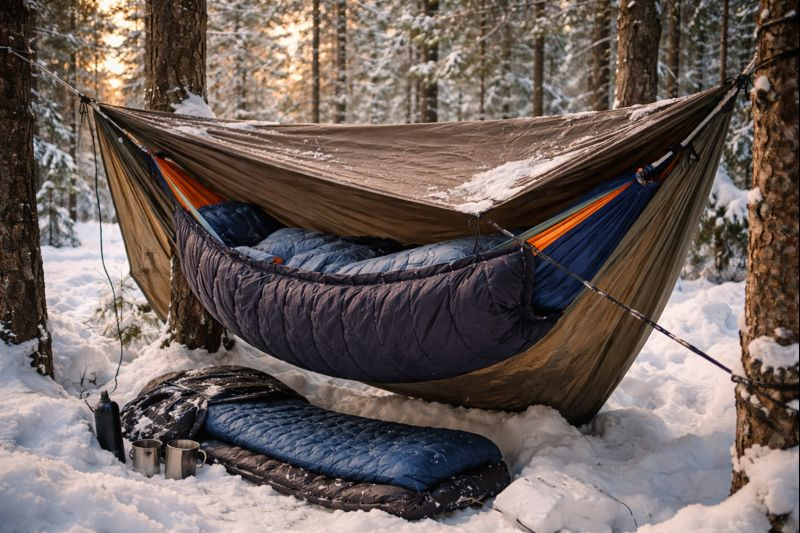
If you’ve ever tried cold-weather hammock camping, you already know this: winter exposes weak setups fast. The ground may be frozen solid, but in a hammock the real enemy is cold air stealing heat from every direction. To stay comfortable, you need the warmest hammock setup for winter, not just a thicker sleeping bag and crossed fingers.
I learned this lesson the uncomfortable way. On a December trip, I trusted a winter-rated sleeping bag and skipped proper bottom insulation. Around 2 a.m., my back felt like it was pressed against a sheet of ice. No amount of layering helped. That night reshaped how I approach winter hammocking — and why this setup works.
Below is a proven, field-tested breakdown of what actually keeps you warm, what gear matters most, and how experienced winter hangers dial things in so they sleep through the night ❄️.
Quick picks for the warmest hammock setup for winter ❄️
If you’re short on time, here’s what made the biggest real-world difference for me:
- Best overall winter insulation: Hammock Gear Economy Incubator (0°F)
- Best budget-friendly cold option: Klymit Insulated Static V
- Best moisture-resistant underquilt: ENO Vulcan UnderQuilt
- Best comfort-first hammock: ENO DoubleNest
I’ll explain why each one works, who it’s best for, and where each has limits — not just the highlights.
Table of Contents
- Why hammocks feel colder in winter
- The insulation rule that matters most
- Warmest hammock setup for winter: full system
- Underquilts vs sleeping pads (real pros & cons)
- Best winter hammock gear (in-depth reviews)
- Winter insulation comparison table
- Layering tricks that actually add warmth
- Who this setup may not be right for
- Common winter hammock mistakes
- Final thoughts
Why hammocks feel colder in winter 🌬️
The cold doesn’t come from above — it comes from below.
In winter hammocks:
- Body weight compresses insulation underneath you
- Cold air circulates freely under your back
- Wind strips heat faster than most people expect
That’s why every warmest hammock setup for winter starts with bottom insulation. Skip that, and even a 0°F sleeping bag won’t save the night.
The one insulation rule most beginners miss
Bottom insulation matters more than your sleeping bag.
I’ve tested pads, bags, layering tricks — none came close to what proper under-insulation delivered. Once I switched, cold spots vanished almost overnight.
Warmest hammock setup for winter (complete system)
A reliable winter hammock setup has five working layers, each doing a specific job.
1️⃣ A winter-friendly hammock
- Breathable fabric
- Enough width for diagonal lay
- Compatible with underquilts
2️⃣ Underquilt (the real heat source)
- Suspended below the hammock
- Insulates without compression
- Handles moving air underneath you
3️⃣ Top insulation
- Sleeping bag or top quilt
- Quilts vent moisture better, bags seal heat tighter
4️⃣ Wind protection
- Full tarp with doors
- Wind is a bigger heat thief than temperature alone
5️⃣ Heat management extras
- Thermal base layers
- Insulated socks & hat
- Hot water bottle trick (seriously underrated 🔥)
Underquilts vs sleeping pads (real-world difference)
Pads can work, but underquilts change the experience entirely.
Pads:
- Shift during the night
- Create pressure points
- Often leave shoulders cold
Underquilts:
- Stay in place
- Eliminate cold spots
- Require less adjustment
If you’re still dialing in your basic hammock size and feel, it’s worth reading [Best Camping Hammock Under $50]first — especially if you want to understand width, lay angle, and fabric feel before committing to winter gear.
Best winter hammock gear (deep reviews)
🟢 ENO DoubleNest Hammock

This hammock isn’t marketed as “winter-only,” but the width makes it surprisingly effective in cold conditions.
What stood out for me:
That extra fabric made underquilt alignment easier. I noticed fewer shoulder cold spots compared to narrower hammocks I’ve used.
Specs
- Material: 70D nylon taffeta
- Weight: ~19 oz
- Capacity: 400 lbs
It usually sits just under the hundred-dollar range depending on availability.
Pros
- Comfortable diagonal lay
- Durable fabric for layering
- Plays nicely with bulky insulation
Cons
- No integrated bug net
- Not ultralight
Best for:
Comfort-first campers who prioritize sleep quality over ounces.
If winter comfort matters more than shaving grams, this hammock earns its spot.
🟢 Hammock Gear Economy Incubator Under Quilt (0°F)
This is the piece that turned winter hammocking from tolerable to genuinely comfortable.
There was one night that sold me completely. Temps dropped lower than forecast, frost coated the tarp by morning, and I slept straight through without adjusting anything. That had never happened before switching to a proper underquilt.
Specs
- Temp rating: 0°F
- Insulation: 850-fill down
- Weight: ~25 oz
Pricing usually lands in the mid-two-hundreds depending on size.
Pros
- Outstanding warmth-to-weight ratio
- No pressure points
- Stays sealed all night
Cons
- Needs moisture awareness
- Higher upfront cost
Best for:
Anyone serious about cold-weather hammock camping who wants consistent warmth.
Not cheap gear, but it’s the kind you buy once instead of replacing twice.
🟢 Klymit Insulated Static V Sleeping Pad

This pad surprised me early on. While it’s not perfect, it kept me warm enough when paired with smart layering.
Specs
- R-Value: 4.4
- Weight: ~25 oz
- Packed size: bottle-sized
Often found around the lower-hundred range.
Pros
- Affordable winter entry point
- Works in hammocks or tents
- Easy to find replacements
Cons
- Can slide during the night
- Shoulder cold spots remain
Best for:
Budget-focused campers or those transitioning into winter hammocking.
Worth considering if you want warmth without committing fully yet.
🟢 ENO Vulcan UnderQuilt

Synthetic insulation shines when moisture becomes unpredictable.
What I noticed:
Bulkier than down, but zero stress during damp, near-freezing nights where down would’ve made me nervous.
Specs
- Temp rating: ~30°F
- Insulation: Synthetic
- Weight: ~45 oz
Typically priced in the mid-hundreds.
Pros
- Performs well when wet
- Durable construction
- Simple suspension
Cons
- Heavier than down
- Takes more pack space
Best for:
Humid climates, coastal areas, or campers who prefer low-maintenance gear.
Winter insulation comparison table ❄️
| Option | Warmth | Weight | Moisture Handling | Best For |
|---|---|---|---|---|
| Down Underquilt | ⭐⭐⭐⭐⭐ | Light | Moderate | Cold, dry winter trips |
| Synthetic Underquilt | ⭐⭐⭐⭐ | Medium | Excellent | Wet or humid winters |
| Insulated Pad | ⭐⭐⭐ | Medium | Excellent | Budget or beginner setups |
Extra warmth tricks that actually work 🔥
- Hot water bottle in a sock at your feet
- Eat a fatty snack before bed
- Wear a beanie (huge difference)
- Pitch your tarp lower than usual
- Block wind direction first, temp second
Small details stack fast in winter.
Who this winter hammock setup may not be right for
This setup isn’t for everyone, and that’s okay.
It may not be ideal if you:
- Count every gram like a thru-hiker
- Only camp above 40°F
- Dislike dialing in suspension
But if winter solitude and comfort matter to you, this system earns its keep quickly.
Common winter hammock mistakes
- Trusting a sleeping bag alone
- Leaving underquilt air gaps
- Pitching tarps too high
- Sweating early, freezing later
- Ignoring wind direction
I’ve made every one of these mistakes — once was enough.
Final thoughts
The warmest hammock setup for winter isn’t about piling on gear. It’s about eliminating heat loss where it matters most. Once bottom insulation is handled, everything else falls into place.
If you enjoy quiet, cold nights when campgrounds empty out, this setup is especially worth dialing in. Done right, winter hammocking becomes something you look forward to — not something you survive.
And if you’re upgrading gradually, start from the bottom up. That’s where the comfort really begins.
Post Disclaimer
This site contains affiliate links (including Amazon) and uses Google AdSense. Purchases through links may earn a commission at no extra cost to you. Ads may be personalized.