
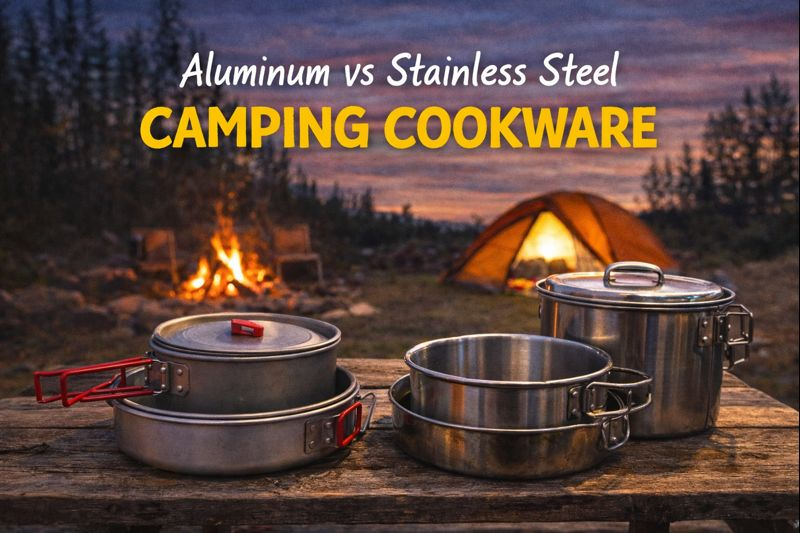
Choosing between aluminum vs stainless steel camping cookware sounds simple at first, but it gets confusing fast once you actually start shopping. Both materials are everywhere in camping gear, both have strong opinions attached to them, and both behave very differently once there’s heat involved.
To be clear right away: aluminum vs stainless steel camping cookware isn’t about which one is “better” overall. It’s about how you camp, what you cook, and how much weight and abuse you’re willing to deal with. I’ve cooked with both over the years, from quick solo meals to bigger campsite setups, and the differences matter more than people expect.
This guide breaks it down in plain terms so you can choose confidently without overthinking it.
Table of Contents
- Why Cookware Material Matters When Camping
- Aluminum vs Stainless Steel Camping Cookware: The Big Picture
- Aluminum Camping Cookware: Pros and Cons
- Stainless Steel Camping Cookware: Pros and Cons
- Aluminum vs Stainless Steel Camping Cookware for Different Camp Styles
- Comparison Table
- Cleaning, Care, and Longevity
- Which One Should You Choose?
- Final Thoughts
Why Cookware Material Matters When Camping 🍳🏕️
At home, cookware choice is mostly about convenience. When camping, it affects everything.
The material your cookware is made from influences:
- How evenly food cooks
- How heavy your pack or storage bin feels
- How much abuse your pots can handle
- How easy cleanup is after a long day
When you’re hungry, tired, and maybe dealing with wind or low light, cookware that fights you can ruin an otherwise good evening.
Aluminum vs Stainless Steel Camping Cookware: The Big Picture
Here’s the simplest way to think about it:
- Aluminum cookware is lighter and heats faster
- Stainless steel cookware is tougher and more durable
That’s the headline, but the details are where your experience actually changes.
Aluminum Camping Cookware: Pros and Cons 🪶
Aluminum is extremely common in camping cookware, especially in lightweight and budget-friendly sets.
Pros of Aluminum Cookware
- Very lightweight
- Excellent heat distribution
- Faster boil times
- Usually more affordable
Cons of Aluminum Cookware
- Dents and scratches easily
- Can warp under high heat
- Plain aluminum may react with acidic foods
- Nonstick coatings wear over time
Best Use Cases for Aluminum
Aluminum works best if you:
- Care about weight savings
- Cook simple meals
- Camp often but casually
- Want affordable gear that works well
Stainless Steel Camping Cookware: Pros and Cons 🔩
Stainless steel cookware feels solid the moment you pick it up. It’s built to last, but it demands more attention while cooking.
Pros of Stainless Steel Cookware
- Extremely durable
- Handles high heat well
- Non-reactive with food
- No coating to wear out
Cons of Stainless Steel Cookware
- Heavier than aluminum
- Heats unevenly
- Food sticks more easily
- Often costs more
Best Use Cases for Stainless Steel
Stainless steel is ideal if you:
- Cook over open fires often
- Want gear that lasts for years
- Don’t mind extra weight
- Are rough on equipment
Aluminum vs Stainless Steel Camping Cookware for Different Camp Styles
Backpacking 🎒
Winner: Aluminum
Weight matters more than anything.
Car Camping 🚗
Tie
Both work well depending on how much cooking you do.
Open-Fire Cooking 🔥
Winner: Stainless steel
Handles abuse and high heat better.
Budget Camping 💰
Winner: Aluminum
Lower cost and easier cooking.
Choosing material is only half the decision though. How cookware nests, what’s included in a set, and how it packs can matter just as much. Seeing how aluminum and stainless are actually used in real-world, affordable camping kits helped me narrow things down early on. I broke that down in a separate guide that focuses on practical, budget-friendly cooking sets if you want a clearer picture of what works together at camp:
👉 Best Camping Cooking Set on a Budget
Aluminum vs Stainless Steel Camping Cookware: Comparison Table
| Feature | Aluminum | Stainless Steel |
|---|---|---|
| Weight | Very light | Heavy |
| Heat Distribution | Excellent | Uneven |
| Durability | Moderate | Very high |
| Ease of Cooking | Easy | Requires attention |
| Price | Lower | Higher |
| Best For | Lightweight, budget trips | Rugged, long-term use |
Cleaning, Care, and Longevity 🧽
Aluminum Care Tips
- Avoid overheating empty pans
- Use non-metal utensils on nonstick surfaces
- Hand wash when possible
Stainless Steel Care Tips
- Preheat with oil to reduce sticking
- Let pans cool before washing
- Scrub without worrying about damage
Stainless steel lasts longer overall, but aluminum is easier day to day.
Which One Should You Choose?
Most campers are happier with aluminum, especially starting out. It’s lighter, easier to cook with, and more forgiving.
Choose aluminum if you want:
- Lightweight gear
- Simple cooking
- Lower cost
Choose stainless steel if you want:
- Maximum durability
- Open-fire cooking
- Long-term investment gear
There’s no wrong choice — just a better fit for how you camp.
Final Thoughts
The debate around aluminum vs stainless steel camping cookware really comes down to practicality. Aluminum is lighter and easier. Stainless steel is tougher and more demanding. Knowing how you camp makes the decision simple.
If you’re considering upgrading your cookware or buying your first set, this is especially worth thinking through now. Good cookware doesn’t make camping fancy — it just makes dinner less stressful, which honestly matters more 🍲🌲.
Post Disclaimer
This site contains affiliate links (including Amazon) and uses Google AdSense. Purchases through links may earn a commission at no extra cost to you. Ads may be personalized.