
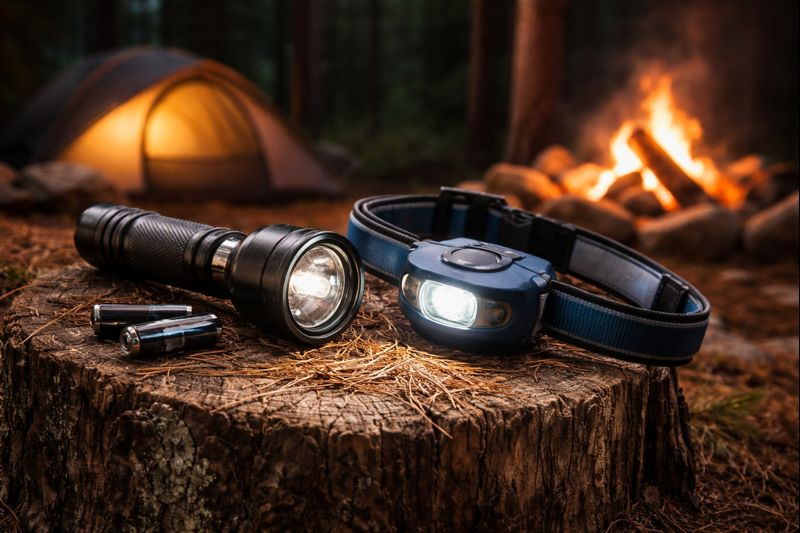
If you’ve ever tried cooking noodles, digging for tent stakes, and doing the “where’s my zipper?” dance in the dark… you already know this question matters: Flashlight Vs Headlamp When Camping On a Budget — which one actually makes life easier without burning your wallet?
I’ve used both on cheap camp trips, and the truth is: the “best” choice depends on what you’re doing after sunset. A headlamp feels like a cheat code for hands-free stuff. A flashlight is simple, tough, and sometimes way more practical than people admit.
Let’s break it down properly (no fluff), so you can spend once and be done.
Table of Contents
- My quick (painful) lesson from the dark 😅
- Flashlight Vs Headlamp When Camping On a Budget: Quick Verdict
- What really matters in a budget camping light
- Headlamp: where it wins (and where it annoys you)
- Flashlight: where it wins (and where it fails)
- Comparison table: budget headlamps vs flashlights
- Budget picks worth considering (with smart Amazon options)
- Real camping scenarios: what I’d pack for each
- How to make cheap lights work better
- Flashlight Vs Headlamp When Camping On a Budget: Which One Wins for You?
- Quick summary + gentle next steps
My quick (painful) lesson from the dark 😅
One night I brought a cheap flashlight only. I felt prepared… until I had to set up a tent while holding the flashlight in my mouth like a pirate with dental problems. Every time I tried pulling a guyline tight, the beam would wobble, and I’d end up illuminating the inside of my cheek instead of the stake.
I finally got the tent up, looked proud for 2 seconds… then realized I’d dropped the flashlight somewhere in the grass and spent 10 minutes searching for the thing in the dark. That was the moment I understood: hands-free light isn’t a luxury— it’s sanity.
Flashlight Vs Headlamp When Camping On a Budget: Quick Verdict
If you want the simplest answer:
- Pick a headlamp if you do anything hands-on at night: pitching a tent, cooking, digging through bags, walking trails, using a bathroom, fixing gear.
- Pick a flashlight if you want a strong beam for spotting things at distance, you like a sturdy tool, or you mostly camp in groups where someone else always has a headlamp anyway.
- Best budget move: bring a basic headlamp as your main light plus a tiny backup flashlight (or phone light as backup). That combo covers almost everything.
What really matters in a budget camping light
Budget doesn’t mean “bad.” It just means you need to prioritize the right features.
1) Beam type: flood vs spot
- Flood beam = wide, soft light (better for cooking, tent setup, reading)
- Spot beam = narrow, long throw (better for trails, finding stuff far away)
The best budget lights usually offer both modes, even if they’re not perfect.
2) Battery type (this is where money disappears)
- AAA/AA: cheap, easy to find anywhere, great for beginners
- Rechargeable (USB): cheaper long-term, but you must manage charging
- 18650-style (flashlights): strong output, good runtime, but more “gear-nerdy”
If you camp a lot, rechargeable wins. If you camp once in a while, AAAs are idiot-proof (in a good way).
3) Runtime (realistic runtime)
Ignore the “100 hours!” marketing unless it says what brightness level. Most lights last long on low mode, and that’s normal.
4) Water resistance
For camping, you want at least:
- IPX4 (splash/rain resistant) minimum
Better is IPX6+ if you’re out a lot.
5) Comfort + usability
A headlamp that bounces, pinches, or slides down your forehead will make you irrationally angry at 9:47pm. Ask me how I know.
Headlamp: where it wins (and where it annoys you)
Where a headlamp is unbeatable
- Setting up camp after dark (hands-free = faster, less stress)
- Cooking (you can actually see what you’re chopping)
- Bathroom runs (not waving a flashlight like a lightsaber)
- Packing in the dark (finding that one missing sock… always one missing sock)
- Hiking or walking trails (keeps light where you’re looking)
The annoying parts (honest talk)
- Bug magnet: light near your face attracts moths like you owe them money
- Blinding your friends: if you forget and look up mid-convo, you flashbang everyone
- Straps can feel sweaty in humid nights
- Cheap ones often lie about lumens (still usable, just… yeah)
Budget tip: a headlamp with a red light mode is underrated. Red light keeps your night vision better and is less “look at me, I’m a lighthouse.”
Flashlight: where it wins (and where it fails)
Where a flashlight shines (pun intended, sorry)
- Spotting things at distance (animals, trail markers, weird noises 👀)
- Searching around camp without lighting up your face
- Durability: many flashlights take drops better than cheap headlamps
- Versatility: you can hand it to someone, set it down, point it anywhere
The weak points
- You lose a hand (or you do the “chin clamp” move)
- Easy to misplace (grass + darkness = goodbye)
- Awkward for cooking or tent setup if you’re solo
Comparison table: budget headlamps vs flashlights
Here’s a practical comparison with budget-friendly options that are commonly available on Amazon (and actually make sense for campers).
| Product | Type | Typical price range | Weight | Materials | Best use case | Notable pros | Biggest downside |
|---|---|---|---|---|---|---|---|
| Energizer Vision HD Headlamp (AAA) | Headlamp | ~$12–$25 | ~3–4 oz (with batteries) | Plastic body, elastic strap | General camp tasks | Cheap, easy batteries, simple controls | Not the comfiest strap on long wears |
| PETZL Tikkina (AAA) | Headlamp | ~$20–$30 | ~3 oz | Plastic body, elastic strap | Reliable “set and forget” camp light | Comfortable, dependable brand, simple | Not the brightest for long-distance spotting |
| Energizer Vision HD Flashlight (AA/AAA) | Flashlight | ~$10–$20 | ~4–6 oz | Plastic/metal mix (varies by model) | Around-camp + backup | Inexpensive, widely available | Beam may be harsher / less refined |
| Anker Bolder LC90 (rechargeable) | Flashlight | ~$25–$40 | ~6–7 oz | Aluminum body | Spotting distance + trail walks | Strong beam, rechargeable, sturdy | Heavier than tiny AA lights |
Note: Weights/prices vary by listing and bundles, but the ranges above are realistic for budget shopping.
Budget picks worth considering (with smart Amazon options)
1) Energizer Vision HD Headlamp (AAA) — “I just need light that works”

Why it’s useful: This is the kind of headlamp you can throw in a bag and not overthink. AAA batteries are easy to find anywhere, even last-minute.
My personal quirk: the first time I used a budget headlamp like this, I felt like a miner from an old movie… but honestly, it did the job and that’s what mattered.
Pros (real-world):
- Cheap upfront cost
- Batteries available in any shop/gas station
- Great for tent setup and quick camp chores
Cons (real-world):
- Comfort can be “meh” after an hour
- Brightness is fine, but not “wow”
Best for: beginners, occasional campers, backup light.
2) PETZL Tikkina — “budget, but I’m tired of junk”

Why it’s useful: If you’ve ever bought a super cheap headlamp that flickers, drains fast, or randomly switches modes… you’ll appreciate a simple, reputable one.
My personal quirk: I like headlamps with boring buttons. If it takes me 7 clicks to find the mode I want, I’m already annoyed.
Pros:
- Comfortable strap and stable fit
- Simple interface (less button-mashing)
- Solid reliability for the price
Cons:
- Not a long-distance spotlight kind of light
- You’ll still want a backup for extended trips
Best for: regular campers who want “works every time” without going premium.
3) Anker Bolder LC90 (rechargeable flashlight) — “I want a real beam”
Why it’s useful: This is the flashlight style people end up liking when they realize distance matters—checking the path, scanning for trail markers, or figuring out what made that sound near the cooler.
My personal quirk: I’ve used strong flashlights like this and immediately started “security-guard scanning” the bushes for no reason. It’s fun. Slightly paranoid, but fun.
Pros:
- Strong beam for spotting far
- Rechargeable, so cheaper long-term
- Durable metal body
Cons:
- Heavier than small AA flashlights
- You must remember charging
Best for: night walks, trail spotting, “what’s over there?” moments.
4) A tiny backup you’ll actually carry
This is where people mess up: they buy one light and assume it’ll never fail.
If you camp even a little, I’d rather you have a tiny backup flashlight than a fancy main light and nothing else. It can be dirt cheap—just dependable.
Real camping scenarios: what I’d pack for each
If you mostly car camp
- Headlamp for cooking, tents, unpacking
- Flashlight optional (nice for scanning around camp)
If you hike in and out (even short distances)
- Headlamp (non-negotiable)
- Small backup flashlight (non-negotiable if you’re smart)
If you camp with kids or a group
- One person always needs a strong flashlight for distance checks
- Everyone else should have a simple headlamp so nobody’s borrowing light all night
If you’re trying to be ultra-budget
- Headlamp + spare AAAs
- Phone as emergency backup
(Just don’t rely on your phone as the only light unless you enjoy stress.)
How to make cheap lights work better
Use these small tricks and your budget gear feels “upgraded”
- Carry spare batteries in a mini zip bag (keep them dry)
- Put a tiny strip of tape on your light so it doesn’t roll off a table
- Aim the headlamp down when talking to people (save friendships)
- Use low mode most of the time (high mode is for short bursts)
- Red light mode at camp = less glare, less chaos
And if you’re building a full budget-friendly lighting setup, it’s worth pairing your personal light with a cheap area light. That’s why I’d point you next to Good Lanterns Under $20—a lantern changes the vibe of camp completely, especially for cooking and hanging out without everyone wearing headlamps like a nighttime SWAT team.
Also, if you’re using rechargeable lights (or even charging your phone for backup), you’ll save yourself a lot of stress by having a tiny power option. I broke down a few good ones in really good camping power banks for under $30—because dead batteries at 11pm is a special kind of miserable.
Flashlight Vs Headlamp When Camping On a Budget: Which One Wins for You?
Here’s the honest decision guide:
Choose a headlamp if…
- You cook at night
- You set up tents after sunset
- You hate holding things while working
- You hike at night or do bathroom runs often
Choose a flashlight if…
- You want distance and spotting power
- You prefer a tool you can aim and set down
- You want something that feels more durable in-hand
The best budget answer (most campers)
Get a basic headlamp as your main, and a small flashlight as backup. You’ll spend a little more than buying only one, but you’ll avoid the most common “camp lighting regret.”
Quick Recap
- Headlamps win for hands-free camping tasks: tents, cooking, packing, bathroom trips.
- Flashlights win for distance, scanning, and durability.
- Best budget combo: headlamp + tiny backup flashlight (cheap insurance).
- Don’t forget that a lantern can make camp feel easier and calmer—especially if you’re trying to stay budget-friendly.
If you’re considering upgrading your setup, start with a headlamp you’ll actually wear comfortably, then add a simple backup light. This is especially worth it if you camp even a couple times a month and you’re tired of fumbling around in the dark like you’re playing hide-and-seek with your own gear. 🌲🔥🏕️
Post Disclaimer
This site contains affiliate links (including Amazon) and uses Google AdSense. Purchases through links may earn a commission at no extra cost to you. Ads may be personalized.