
If you’re trying to keep your camping setup cheap (same here), the fuel you choose matters more than people admit. Propane vs butane camping stove isn’t just a nerdy comparison—it affects boil time, cold-weather performance, how annoying your setup is to pack, and whether you end up eating crunchy noodles at 10pm 😅.
I’ve run both styles on weekend beach trips, rainy roadside cookups, and one “why is it this windy?” hillside situation. This guide breaks down what actually matters—especially if you’re buying budget gear and don’t want to waste money on the wrong fuel.
Table of Contents
- Quick answer: which is better on a budget?
- Propane vs butane camping stove (budget): the real differences
- Cold weather performance (this is where people mess up)
- Fuel availability and cost: what you’ll notice in real life
- Packability and weight: what’s actually annoying to carry
- Safety and smell: leaks, flare-ups, and tips
- Boil time and simmer control
- The best budget setup for most campers
- Helpful gear worth linking (optional)
- Summary: propane vs butane for budget campers
Quick answer: which is better on a budget?
If you want the simplest “works almost anywhere” option, propane usually wins—especially if you might camp in cooler weather or want fuel that’s easy to find.
If you camp mostly in warm weather and value a compact setup (and you like the “tabletop stove” vibe), butane can be cheaper-feeling and more convenient.
My honest take:
- Propane = more reliable, better in cold, more flexible stove options
- Butane = neat and easy, but weaker in cold and can be hit-or-miss for availability depending on where you live/travel
Propane vs Butane Camping stove: The Real Differences
Fuel canister style and how it changes your setup
This is the first thing you’ll notice.
Butane usually comes in those long slim cans (often used with tabletop stoves). They pack flat-ish in a bag, but the stove itself is often bulkier.
Propane commonly comes in the green 1 lb cylinders, or you can use bigger tanks if you’re car camping. The stove can be tiny (like a backpacking burner) or bigger (two-burner stoves).
Budget reality:
- If you’re mostly car camping, propane setups can be stupid simple and scalable.
- If you’re packing light, propane can still work (small burners), but those 1 lb tanks are kinda chunky.
Flame characteristics
- Butane stoves often feel “smooth” and easy for cooking—good for frying eggs without burning them into a tragic crispy sheet.
- Propane stoves can blast heat harder (depends on the stove), which is awesome for boiling water fast, but some cheap burners don’t simmer as nicely.
Not always, but often.
Cold weather performance (this is where people mess up)
Here’s the big one: butane struggles in cold temps.
Butane doesn’t vaporize as well when it’s chilly, so the flame gets weak or sputtery. If you camp somewhere that gets cold at night (even if daytime feels fine), it can be a problem.
Propane handles cold better, so it stays more reliable when temps drop.
My tiny, painfully personal story (and yes, it was dumb)
One night I brought a butane stove on a “quick” budget camp where the evening got colder than I expected. I figured, eh, I’m not climbing Everest, it’ll be fine.
So I tried to boil water for ramen and the flame looked like a birthday candle fighting for its life. I ended up crouching over it like a gremlin, whispering encouragement to my noodles. The water never truly boiled… it just got emotionally warm.
Lesson learned: if your trip might get cold, butane can humble you real quick 😂
Practical rule of thumb
- If nights might drop into cool/cold territory: lean propane.
- If it’s warm-weather camping: butane is totally workable.
Fuel availability and cost: what you’ll notice in real life
Availability
This depends a lot on your country and even the stores near you.
- Propane is commonly available in camping/outdoor sections, hardware stores, and sometimes supermarkets.
- Butane is sometimes easier to find in general stores (because people use it for tabletop stoves), but not always.
Cost
Here’s the sneaky part: the per-can price can mislead you.
- Butane cans can look cheap at checkout, but you may burn through them faster depending on stove efficiency and conditions.
- Propane cylinders can cost more per unit, but they perform better in cold and you can often choose bigger tanks for better value (car camping).
Budget advice: buy fuel where it’s cheapest locally and standardize around what’s easy to restock near you. Running out mid-trip is the expensive option.
Packability and weight: what’s actually annoying to carry
If you’re hiking even a little bit
A tabletop butane stove is usually not what you want in a backpack. It’s bulkier, and the “case + can” system is awkward unless you’re literally walking 5 minutes from the car.
A small propane burner can be lighter (stove-wise), but the green propane cylinders are bulky. Some folks use different canister styles and adapters, but if you’re going full budget-simple, stick to what’s easy.
If you’re car camping
Car camping changes everything:
- Propane is easy.
- Butane is also easy.
- Your main concern becomes: wind + stability + cooking comfort, not grams.
Safety and smell: leaks, flare-ups, and tips
Both fuels are safe when used correctly, but budget gear sometimes has looser tolerances, so you’ve gotta be a little more careful.
Safety basics that actually matter
- Always attach canisters outside, never inside a tent (even if it’s raining and you’re tempted).
- Do a quick smell check before lighting. If you smell gas strongly, stop and re-seat the connection.
- Keep your stove on a stable surface. A wobbly stove is a pot of boiling regret waiting to happen.
Which feels safer?
- Butane tabletop stoves often feel stable and “contained,” which I like for casual cooking.
- Propane backpack-style burners can be tippy with big pots unless you use a wider base.
If you’re cooking for more than yourself, stability matters more than brand name.
Boil time and simmer control
Boil time
Propane often has the edge when you want fast boiling, especially if it’s windy or cooler out. But the stove design matters as much as the fuel.
Simmer control
Butane tabletop stoves often feel better at low-and-slow cooking (again: depends on model). If you like real meals—rice, eggs, sautéing—this can matter.
Tip: If you mostly boil water (coffee, noodles, freeze-dried meals), propane is usually the “get it done” choice.
If you actually cook, butane can feel nicer.
Propane vs butane camping stove: which is better for your camping style?
Choose propane if you:
- Camp in mixed weather (including cool nights)
- Want flexible stove options (tiny burners to bigger stoves)
- Prefer fuel that’s widely supported in camping gear
- Want stronger, more reliable heat output
Choose butane if you:
- Camp mostly in warm weather
- Want an easy tabletop setup for casual cooking
- Value convenience and simple “click + cook”
- Don’t want bulky green cylinders
The best budget setup for most campers
If you want one setup that covers the most situations cheaply:
Best “one-and-done” budget choice
A simple propane stove is usually the safest bet for most people because:
- it works better when it’s cold,
- it’s widely supported,
- and it scales from solo to family-style cooking.
Best budget choice for comfort cooking (warm weather)
A butane tabletop stove is honestly a pleasure to use when temps are mild:
- stable pot support,
- easy flame control,
- feels like a tiny kitchen burner.
Optional Helpful Gear
Helpful Budget Stove Accessories (Worth It)
| Accessory | Why It’s Useful | Recommended Type | Buy |
|---|---|---|---|
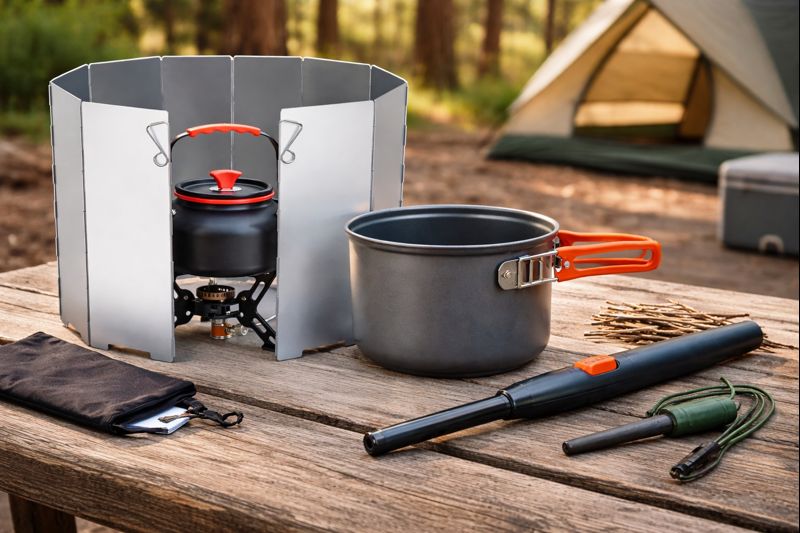
| Camping Stove Windscreen | Blocks wind so your flame stays strong, boils water faster, and uses less fuel — especially noticeable on breezy campsites. | Foldable aluminum windscreen with ground stakes | 🛒 Buy it here |
| Stable Camping Pot (Wide Base) | A wider base lowers the center of gravity, making pots far less likely to tip over on small burners or uneven ground. | Hard-anodized aluminum pot with flat, wide bottom | 🛒 Buy it here |
| Long Camping Lighter / Igniter Backup | Piezo igniters love failing at the worst moment. A long lighter saves time, frustration, and burnt fingers. | Wind-resistant long-neck lighter or ferro rod | 🛒 Buy it here |
Summary: propane vs butane for budget campers
Here’s the clean takeaway:
- Propane is the more reliable, all-around budget option—especially if there’s any chance of cooler temps, wind, or longer trips.
- Butane is super convenient and nice to cook on, but it’s best for warm-weather camping and shorter, casual trips.
- The “best” choice depends on temperature + availability + how you cook (boil-only vs real meals).
If you’re considering buying just one setup to cover most situations, propane is usually the safer bet. But if you mostly camp in warm weather and love easy cooking, butane can be a comfy little win. 🌲🔥🏕️
Post Disclaimer
This site contains affiliate links (including Amazon) and uses Google AdSense. Purchases through links may earn a commission at no extra cost to you. Ads may be personalized.