
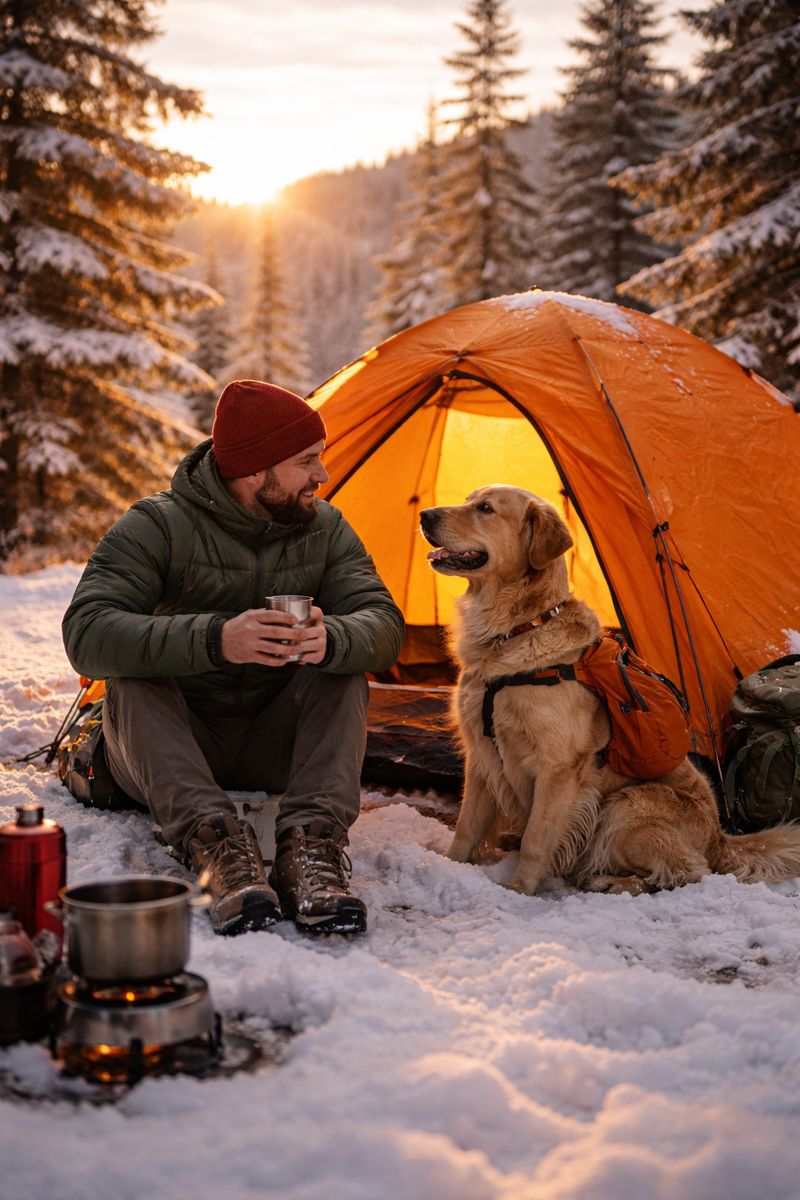
Cold-weather camping is a weird mix of magic and mild suffering. The stars look sharper, the air smells cleaner, and your coffee tastes like it was blessed by the outdoors gods… right up until 2:14am when a gust of wind finds the one zipper gap you didn’t notice. 😅
This guide is for staying warm without spending mountaineer money. I’m focusing on tents that handle cold nights better than your average summer dome—meaning: stronger poles, better fly coverage, smarter venting, and fewer “why is my face wet?” condensation surprises.
And yes, Best Budget Tents for Cold Weather Camping is the goal here—warm enough, tough enough, still affordable, and actually realistic for normal people.
My quick, painfully honest cold-tent lesson (tiny story)
The first time I camped in “not even that cold” weather, I wore thick socks to bed and felt smug… until I realized my tent had basically turned into a wind instrument. Every gust made it whomp against my sleeping bag like someone was fluffing me aggressively at 3am. I tried “fixing it” by tightening one guyline… and accidentally loosened another. I spent the night playing whack-a-mole with straps, looking like a confused raccoon with a headlamp. The next morning I learned: cold camping is mostly draft control and setup discipline, not just “buy warmer gear.” 🦝
Even the best budget tent won’t save you if your sleep setup is off. If you’re still waking up cold despite decent shelter, How to Sleep Warm Camping on a Budget breaks down the small, cheap tweaks that actually move the needle — especially ground insulation and heat loss you don’t notice until it’s 2am.
Table of Contents
- What actually makes a tent “cold-weather friendly”
- Best Budget Tents for Cold Weather Camping: Quick Picks
- Comparison Table: Price, weight, materials, best use
- Best Budget Tents for Cold Weather Camping: Reviews
- Cold-camping setup tips that matter more than people think
- Condensation: the cold-weather problem nobody brags about
- Summary: picking the right tent for your style
What actually makes a tent “cold-weather friendly”
A tent doesn’t “hold heat” like a cabin. What it can do is block wind, reduce drafts, manage moisture, and avoid collapsing under weather.
Here’s what matters most:
- Full-coverage rainfly: Helps cut wind and blowing rain/sleet. True 4-season tents usually do this well.
- Pole strength + geometry: More rigid structure = less wall slap, better snow/wind handling.
- Less mesh (or closable panels): Mesh is great in summer, but it bleeds warmth in cold wind. Many shoulder-season tents balance mesh + fabric smartly.
- Vent control: Cold nights = condensation risk. Good vents keep airflow without turning your tent into a fridge.
- Floor waterproofing + bathtub floor: Cold ground + wet ground is a miserable combo.
Also: your sleep system still does the heavy lifting. If you want to stack warmth fast, read How to Sleep Warm Camping on a Budget mid-trip planning—especially if you’re trying to stop heat loss from the ground and drafts around your shoulders. It’s one of those “wish I knew this sooner” things.
Best Budget Tents for Cold Weather Camping: Quick Picks
Best overall cold-budget balance (true 4-season features):
- ALPS Mountaineering Tasmanian 2-Person Tent
For Best value for windy, rough nights (4-season style, tough build):
- GEERTOP 2-Person 4-Season Tent (Amazon listing)
Best “budget but livable” backpacking option (strong 3-season):
- ALPS Mountaineering Lynx 2-Person Tent
Best lightweight pick for cool-weather trips (not deep winter):
- Naturehike Cloud-Up 2 Person Tent (Cloud-Up Base)
Comparison Table: Price, weight, materials, best use
| Tent | Typical price range* | Weight | Materials (high level) | Best use case | Notable pros |
|---|---|---|---|---|---|
| ALPS Tasmanian 2 | ~$280 range | ~7 lb 15 oz | 4-season build, full fly, heavy-duty floor | Cold + wind + shoulder-season storms | Great value 4-season, roomy, dual vestibules |
| ALPS Lynx 2 | ~$175–$190 range | ~5 lb | Polyester fly/floor, aluminum poles | Cool/cold nights, car camping, light backpacking | Easy setup, solid weather protection for price |
| GEERTOP 2P 4-season (Amazon listing) | ~$140–$220 range | ~6.17 lb | Snow-skirt style, storm-ready design | Windy ridges, cold rain, light snow | Draft control, compact pack, strong “winter-ish” vibe |
| Naturehike Cloud-Up 2 Base | ~$150–$170 range | ~4.25–4.3 lb | 210T polyester, aluminum poles | Cool nights, high humidity, budget backpacking | Light, taped seams, includes footprint |
*Price ranges change constantly with sales/colors/sellers, so I’m keeping these realistic but not weirdly over-specific. (If you catch a sale, you win.)
Best Budget Tents for Cold Weather Camping: Reviews
Below are the deep-dive reviews with the stuff people actually want to know when it’s cold, dark, and you’re deciding whether to crawl out and tighten guylines.
1) ALPS Mountaineering Tasmanian 2-Person Tent (Best true cold-weather value)

If you want a real cold-weather capable tent without paying expedition prices, the Tasmanian 2 is one of the most consistently recommended “budget 4-season” options. It’s built around full coverage and storm-worthiness—meaning you get better wind blocking and less drafty nonsense than a mesh-heavy summer tent.
Specs (practical highlights):
- Typical price range: often around the ~$280 mark
- Weight: ~7 lb 15 oz
- Size: around 92 x 62 x 46 in (listed dimensions)
- Weather protection: 4-season design + high waterproof floor coating (listed as 5000mm floor coating)
My Observation:
This is the tent I’d pick when I’m tired and don’t want to play “guess the wind direction” at midnight. The coverage is forgiving—like it expects you to be slightly dumb and still wants you to sleep.
Pros vs cons (chart-style):
| Pros ✅ | Cons ⚠️ |
|---|---|
| Legit storm-focused shape and fly coverage | Heavier than backpacking-focused 3-season tents |
| Great value for a 4-season style tent | Overkill for warm climates or fair-weather camping |
| Spacious for a 2P cold setup (sleep system takes space) | Costs more than “ultra budget” options |
| Dual vestibules / practical storage (commonly praised) | Weight adds up fast if you’re hiking big miles |
Best for:
- Cold, windy sites (exposed campgrounds, ridges, open fields)
- Shoulder-season storms, wet cold, and “I need reliability” trips
- People who’d rather carry a bit more weight than suffer all night
2) GEERTOP 2-Person 4-Season Tent (Best budget storm shield feel)

GEERTOP has a few versions floating around, but their 2-person 4-season-style designs are popular because they aim straight at draft control and bad-weather handling—often with a snow-skirt style and a compact, stormy silhouette. Their own product info emphasizes “4-season” use and storm protection features.
Specs (what matters):
- Typical weight shown: ~6.17 lb (Amazon snippet)
- Packed size (common listing detail): compact, around ~18″ long pack (varies by model)
- Cold-ready features (brand-stated): snow skirt + all-weather focus
My Observation:
This is the kind of tent that makes you feel safer when the weather turns, even before anything happens. Like wearing a rain jacket indoors. Comforting… slightly ridiculous… but comforting.
Pros vs cons (chart-style):
| Pros ✅ | Cons ⚠️ |
|---|---|
| Draft control and weather-focused design (snow-skirt style) | Heavier than truly light backpacking tents |
| Packs fairly compact for the category | Some versions vary—double-check exact model details before buying |
| A solid pick for cold rain + wind at a lower price range | Interior space can feel “cozy” with bulky winter pads/bags |
| Better confidence in messy weather than a mesh-heavy tent | Venting must be managed to avoid condensation |
Best for:
- People camping in wind, cold rain, light snow
- Budget campers who want a “winter-ish” tent feel without going full expedition
- Anyone who camps in places where weather changes its mind every 30 minutes
3) ALPS Mountaineering Lynx 2-Person (Best affordable all-around cool-weather tent)

The Lynx 2 isn’t a true 4-season tent, but it’s a strong budget workhorse that does well in cool-to-cold conditions if you site it smartly (out of direct wind, good stake work). It’s known for easy setup and practical weather protection for the price.
Specs (useful ones):
- Minimum weight shown: ~5 lb
- Base size shown: 5′ x 7’6″, center height ~46″
- Typical price range: around ~$175–$190 depending on seller
My Observation:
I love a tent that doesn’t make me do geometry in the dirt. This is a “brain off, camp on” setup—especially after a long day when your fingers are cold and your patience is… not at its best.
Pros vs cons (chart-style):
| Pros ✅ | Cons ⚠️ |
|---|---|
| Fast, straightforward setup | Not a true winter tent—wind management matters |
| Good balance of space and weight for the price | More mesh than a 4-season design |
| Solid entry-level backpacking + car camping choice | Can get wall slap in strong gusts if not guyed well |
| Widely available and supported | Needs smart venting in cold to reduce condensation |
Best for:
- Cool/cold nights (think fall/spring, mild winter, sheltered sites)
- Budget campers who want dependable without going heavy
- People who want a “one tent that does most trips”
Mid-article note: if your tent choice is “good but not 4-season,” your sleep system becomes extra important. That’s why Best Sleeping Bags Under $50 for Cold Weather can be a game-changer—especially if you’re trying to stay warm without upgrading everything at once.
4) Naturehike Cloud-Up 2 Person Tent (Cloud-Up Base) (Best lightweight cool-weather pick)

This one is a strong pick for people who want to keep pack weight down but still camp in chilly conditions (not deep winter). It’s listed as a 3-season tent, but it’s built with a waterproof-coated fabric, taped seams, aluminum poles, and it even includes the footprint in the package—huge value for budget backpackers.
Specs (from listing details):
- Weight: ~4.3 lb listed
- Seasons: 3-season
- Fabric: 210T polyester with waterproof coating
- Water resistance: PU 3000mm+ listed
- Footprint included: yes
My Observation:
This tent feels like it was designed by someone who hates carrying stuff (same). It packs small enough that you don’t have to sit on your bag like a cartoon just to zip it.
Pros vs cons (chart-style):
| Pros ✅ | Cons ⚠️ |
|---|---|
| Lighter weight for the price (~4.3 lb) | Not intended for true winter storms (listed 3-season) |
| Good waterproof rating for budget trips (PU 3000mm+) | Cold wind will cut through more than a 4-season fly |
| Includes footprint (real value) | Venting still matters—condensation can happen fast in cold |
| Aluminum poles, compact pack size | Roomy for 1 + gear, “snug” for 2 with winter pads |
Best for:
- Backpackers on a budget who camp in cool weather
- People who want lighter gear but still need legit rain protection
- Trips where “cold” means chilly nights, not full alpine winter
Cold-camping setup tips that matter more than people think
This is the “you can fix most problems without buying a new tent” section.
- Pitch out of the wind first, pretty second. Even a small hill or bushes can reduce gusts a lot.
- Stake like you mean it. Cold ground is often harder. If your stakes are loose, your fly will flap and steal warmth.
- Tight fly = warmer sleep. Not because it insulates, but because it reduces drafts and wall slap.
- Use your backpack as a wind block. Place it near the lower side that faces wind (inside vestibule if safe/dry).
- Put tomorrow’s clothes at your feet. Not for “heat,” but so your clothes aren’t ice-cold in the morning (tiny morale win).
- Ground insulation matters more than people admit. A better sleeping pad can feel like upgrading your whole camp.
Condensation: the cold-weather problem nobody brags about
Cold air + warm breath + low ventilation = moisture. Then it freezes or drips. Fun.
How to reduce it:
- Vent even when it feels wrong. Crack a vent or door top—controlled airflow beats waking up to a wet bag.
- Keep wet gear out. Snowy boots and damp jackets raise humidity fast.
- Don’t cook inside unless you truly must. Steam is basically condensation fuel.
- Pick a tent with adjustable venting and decent fly spacing. That’s why the Naturehike’s “double layer airflow” approach can help in humid conditions.
Summary: picking the right tent for your style
Here’s the simplest way to choose:
- Want the most cold-ready budget option? Go ALPS Tasmanian 2—strong storm focus and real 4-season design.
- Camping in wind/cold rain and want that “shielded” feel? GEERTOP 2P 4-season style is a solid value play.
- Want an affordable all-around tent that still handles chilly trips? ALPS Lynx 2 is dependable and easy to live with.
- Backpacking and keeping weight down for cool-weather trips? Naturehike Cloud-Up Base 2 brings great value and light weight.
If you’re considering cold-weather camping on a budget, it’s especially worth it to pick a tent that matches your realconditions—wind exposure, wet cold, and how far you’re carrying it—because that’s what decides whether your trip feels cozy… or like a long argument with the weather. 🌲🔥🏕️
Post Disclaimer
This site contains affiliate links (including Amazon) and uses Google AdSense. Purchases through links may earn a commission at no extra cost to you. Ads may be personalized.