
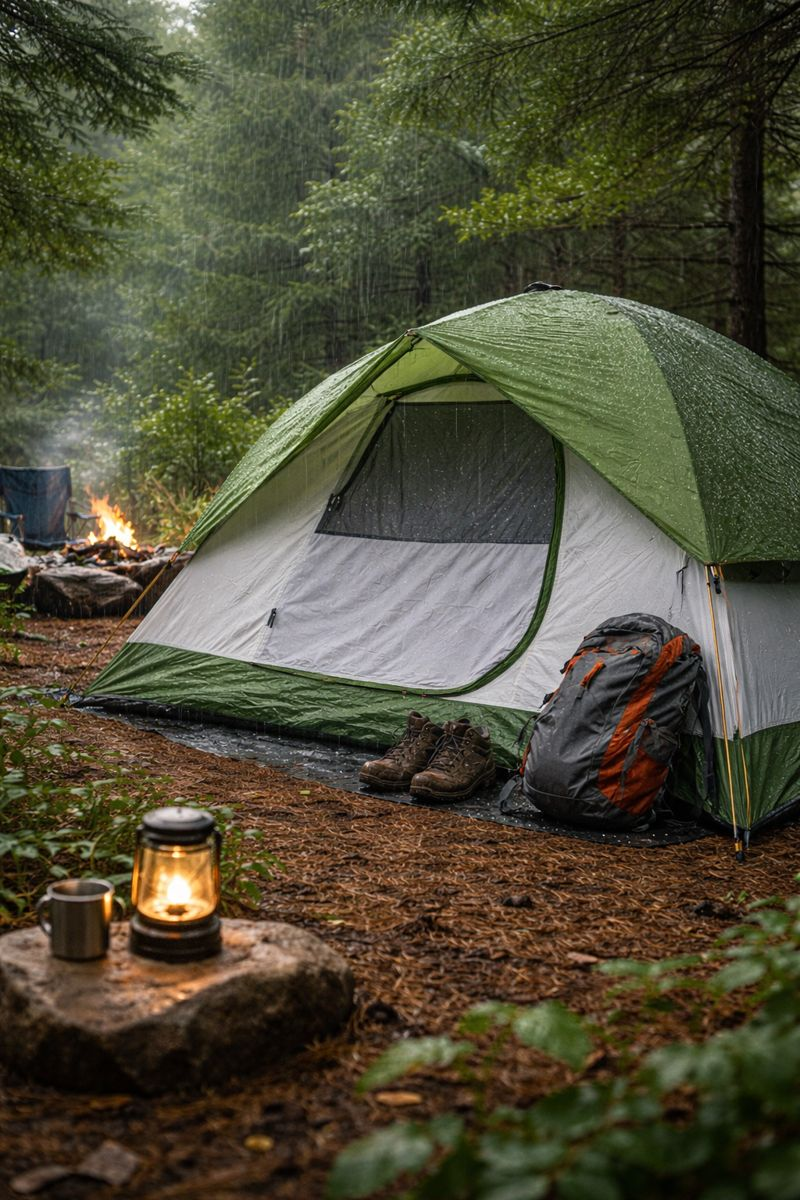
If you’ve ever woken up to a drip on your forehead and a soggy sleeping bag footbox… welcome to the club. The good news is Cheap Tents that Doesn’t Leak are real—you just need to know what actually keeps water out, because it’s not always the price tag.
In this guide, I’ll break down the exact features that matter (rainfly coverage, seam tape, bathtub floors, ventilation), how to avoid “fake leaks” like condensation, and a handful of budget tents that have a solid track record of staying dry when the weather turns grumpy 🌧️🏕️
Table of Contents
- Why cheap tents leak (and why some don’t)
- Cheap Tents that Doesn’t Leak: 8 must-have features
- Cheap Tents that Doesn’t Leak: what to check before you buy
- Waterproof ratings explained (without the headache)
- Rainfly design: the difference between damp and dry
- Seams and floors: where leaks really start
- Condensation vs leaking: how to tell the difference
- 7 cheap tents that don’t leak (real-world reviews)
- Comparison table: best budget tents for staying dry
- Setup mistakes that cause leaks (even in good tents)
- Budget leak-proofing tips (easy, cheap upgrades)
- My short story: the night my “moat” backfired
- Summary
Why cheap tents leak (and why some don’t)
A lot of budget tents leak for boring reasons—not because every cheap tent is junk.
Here’s what usually causes leaks:
- Short rainflies that don’t cover doors or sidewalls
- Unsealed seams (especially on the rainfly and floor corners)
- Thin floors that wet-out when water pools underneath
- Poor ventilation causing heavy condensation that feels like a leak
- Bad pitching (loose fly, wrong angle, low spot campsite)
But some budget tents stay dry because the manufacturer got the important stuff right: full coverage fly, taped seams, decent coatings, and a bathtub floor.
Cheap Tents that Doesn’t Leak: 8 must-have features
If your main goal is “stay dry, sleep happy,” these are the non-negotiables.
1) A full-coverage rainfly (not a tiny hat)
A good fly comes down far enough to protect mesh and doors from wind-driven rain.
What to look for:
- Fly that reaches close to the ground on the sides
- Vestibules that protect doors/entry points
- Tension points (guy-out loops) so you can tighten the fly
2) Factory-taped seams (or easy seam sealing)
Seams are the #1 leak path on budget tents. Taped seams help a lot.
Quick check:
- Look for “taped seams” on the fly and floor
- If not taped, confirm the fabric can be seam sealed with common sealants
3) A real bathtub floor
The floor should rise several inches up the walls so water can’t wick in along the edge.
4) Decent floor fabric (especially for wet ground)
Thin floors can “wet out” under pressure (like your hips and elbows), even if the coating is fine.
Budget tip: always use a groundsheet or footprint if the floor feels thin.
5) Ventilation that reduces condensation
A lot of “leaks” are actually condensation dripping off the inside of the fly.
Look for:
- Mesh panels
- Vents near the top
- A fly that sits a bit off the inner tent so air can move
6) Strong poles + stable shape
Flimsy poles can collapse in wind, letting the fly slap the inner tent and transfer moisture.
7) A fly that can be pitched tight
Loose fly = sagging fabric = water pooling and sneaking through seams.
8) A design that keeps mesh protected
If your doors are mostly mesh with no proper storm flap, rain can blow right in.
Cheap Tents that Doesn’t Leak: what to check before you buy
Here’s my quick “10-minute research checklist” that saves you from regret:
- Does the rainfly fully cover the doors? (photos tell the truth)
- Are seams taped? (fly + floor, not just “some seams”)
- Is the floor bathtub-style?
- Is the fly separate from the inner? (helps reduce condensation transfer)
- Are there vents or high mesh panels?
- Are guy lines included? If not, you’ll want to add them.
- Do reviews mention storms specifically? Search reviews for: “rain,” “storm,” “leak,” “downpour,” “wet”
- Is it free-standing or requires stakes? Non-free-standing can still be great, but only if you pitch well.
Waterproof ratings explained (without the headache)
You’ll see waterproof ratings like “1500mm” or “3000mm.” That number is a measure of how much water pressure the fabric can handle.
A practical, real-world rule:
- Rainfly: ~1500mm–3000mm is usually fine for budget tents
- Floor: higher is better (floors take pressure from your body)
But here’s the catch: ratings don’t matter if seams aren’t sealed or the fly is badly designed. A “high rating” won’t save a short fly in sideways rain.
Rainfly design: the difference between damp and dry
A budget tent can have decent fabric, then lose the battle because of the fly shape.
Full fly vs short fly
- Full fly: better protection from wind-driven rain, better vestibule coverage
- Short fly: often okay in light rain, gets sketchy fast in real weather
Vestibules matter
Vestibules keep rain from blowing directly into the door area and let you store gear without bringing water inside.
Seams and floors: where leaks really start
Seams
Water loves seams because stitching creates tiny holes.
Best case:
- Factory seam tape on rainfly + floor corners
If not taped:
- Seam sealing is cheap and worth it (more on that below)
Floors
Floors leak when:
- Water pools underneath
- You kneel or press on the floor (pressure forces water through)
- The floor coating is thin or worn
Simple fix: use a footprint/groundsheet and pick your campsite like you’re avoiding lava.
Condensation vs leaking: how to tell the difference
This saves people a ton of frustration.
It’s probably condensation if:
- You’re dry at the start of the night, then things feel damp by morning
- Moisture is on the inside of the fly
- It happens more when it’s cold outside and warm inside
- You cooked inside the tent or breathed into a closed-up space all night
It’s probably a leak if:
- Water is coming through seams or corners
- You find dripping that lines up with a seam line
- The floor is wet in one spot that matches a low point outside
- You see water running under the tent
Ventilation + fly tension usually fixes condensation. Seam sealing + site selection fixes true leaks.
7 cheap tents that don’t leak (real-world reviews)
Below are budget tents that are commonly found under/around the $100-ish zone (prices bounce around a lot), and have a reputation for staying dry when set up properly.
1) Coleman Sundome (2/4/6P)

My take: This is one of those tents that’s not fancy, but it’s dependable if you respect its limits. It handles normal rain well, especially with the fly pitched tight.
Price range: usually budget-friendly
Materials: polyester fly/body (varies by model year)
Weight: heavier (car-camping vibe)
Capacity: true to size for car camping, tight for backpacking
Pros
- Easy setup, very beginner-friendly
- Decent rain protection for the money
- Widely available, lots of real user feedback
Cons
- Not a storm fortress in high wind
- Heavier and bulkier than backpacking tents
Best for: casual car camping, weekend trips, campsites with mild-to-moderate rain
Personal quirk: The first time I used one, I was shocked how well it did—then I immediately got cocky and tried to “improve airflow” by leaving the door cracked. Spoiler: airflow was great… so was the mist 🙃
2) Coleman Skydome

My take: Similar reliability to the Sundome, but with roomier headspace and fast setup. Good rain performance for typical camping conditions.
Price range: budget to mid-budget
Materials: polyester
Weight: heavier
Capacity: roomy for car camping
Pros
- More headroom, less “tent crouch”
- Quick pitch
- Handles steady rain well when staked properly
Cons
- Bulk/weight for backpacking
- Needs good staking for best fly tension
Best for: family camping, folks who want easy comfort and solid rain protection
3) ALPS Mountaineering Lynx (1/2P)

My take: One of the better “budget backpacking” style tents that can actually take a beating. Full fly design helps a lot in rain.
Price range: often around the lower-mid range
Materials: polyester fly/body, aluminum poles (varies)
Weight: backpacking-friendly for the price
Capacity: realistic (2P is cozy but workable)
Pros
- Full coverage fly + decent vestibules
- Generally better storm worthiness than ultra-cheap tents
- Good value for backpacking
Cons
- Not ultralight
- Ventilation can still require smart setup in humid weather
Best for: budget backpackers, rainy shoulder seasons, people who want a “real tent” without premium pricing
Personal quirk: The zippers on mine felt stiff early on, and I treated them like they were made of glass. Two trips later? Smooth as butter. Apparently the tent just needed to break in… like my knees.
4) Naturehike Cloud-Up (various sizes)

My take: Often praised as a value tent for backpackers. Can stay dry if pitched tight and guyed out well.
Price range: budget to mid depending on version
Materials: typically nylon/polyester depending on model
Weight: generally lighter
Capacity: tends to run snug
Pros
- Great packability for the cost
- Can handle rain well with proper tension
- Good for people who count grams but still have a budget
Cons
- Some models require careful setup to avoid fly contact
- Might feel tight if you’re broad-shouldered or using a wide pad
Best for: solo/2-person budget backpacking, hikers who want lighter gear without premium prices
5) GEERTOP Backpacking Tent (varies)

My take: A common budget option that’s often chosen for rain resistance, especially when seam-sealed and pitched well.
Price range: budget
Materials: varies by model
Weight: moderate
Capacity: usually true-ish but snug in practice
Pros
- Decent rainfly coverage on many versions
- Affordable entry into backpacking tents
- Works better than you’d expect if you take time to pitch it right
Cons
- Quality control can vary
- Stakes/guy lines sometimes need upgrading
Best for: budget hikers, occasional rainy trips, folks willing to do a little DIY improvement
6) Kelty Discovery / Kelty Late Start (model dependent)

My take: Kelty tends to do the basics well. When you can catch these on sale, they’re a solid pick for staying dry.
Price range: can dip into budget on sale
Materials: typically polyester
Weight: moderate
Capacity: fair for backpacking
Pros
- Reliable construction for the price
- Better-than-random quality control
- Good rainfly design on many models
Cons
- Not always under $100 unless discounted
- Some models prioritize ventilation over full storm sealing
Best for: beginner backpackers who want fewer surprises in wet weather
7) Coleman Hooligan (2/3P)

My take: A simple tent that often gets mentioned for rain performance in the budget space. More of a “no-frills” shelter that can keep you dry.
Price range: budget
Materials: polyester
Weight: moderate/heavy
Capacity: decent
Pros
- Straightforward rain coverage
- Often a good value
- Easy enough for new campers
Cons
- Not ultralight
- Needs proper staking for best performance
Best for: casual campers who want a simple tent that can handle rain nights
Mid-article internal link (as required):
If you want a more focused list specifically for lightweight, trail-friendly options in the same price neighborhood, check out Best Budget Backpacking Tents Under $100. It’s helpful if you’re trying to stay dry and keep pack weight reasonable—without overthinking it.
Comparison table: best budget tents for staying dry
| Tent | Price range | Weight | Materials | Best use case | Notable pros |
|---|---|---|---|---|---|
| Coleman Sundome | Budget | Heavy | Polyester | Car camping | Easy setup, reliable in steady rain |
| Coleman Skydome | Budget–Mid | Heavy | Polyester | Family/car camping | Great headroom, quick pitch |
| ALPS Lynx | Budget–Mid | Moderate | Polyester + alu poles | Backpacking | Full fly, strong value |
| Naturehike Cloud-Up | Budget–Mid | Light–Moderate | Nylon/poly (varies) | Backpacking | Packs small, good rain protection when tight |
| GEERTOP (varies) | Budget | Moderate | Varies | Budget backpacking | Affordable, decent coverage |
| Kelty (sale models) | Mid (budget on sale) | Moderate | Polyester | Backpacking | More consistent build quality |
| Coleman Hooligan | Budget | Moderate–Heavy | Polyester | Casual camping | Simple, effective rain coverage |
Setup mistakes that cause leaks (even in good tents)
A tent can be “waterproof” and still leave you wet if you pitch it wrong.
1) Pitching in a low spot
If the ground slopes toward you, water will too.
Fix: camp slightly higher and avoid natural “basins.”
2) Not tightening the rainfly
Loose fly = sagging fabric = water pooling and dripping.
Fix: stake corners tight, use guy lines, re-tension after the fabric relaxes.
3) Fly touching the inner tent
When the fly presses against the inner, moisture transfers through contact.
Fix: tension points + guy-outs + correct pole structure.
4) No groundsheet on wet ground
Thin floors + wet soil + pressure points = seep.
Fix: cheap tarp/footprint (trimmed to stay under the tent, not sticking out).
5) Leaving the door open “just a crack”
This one is basically an invitation for wind-driven rain.
Fix: vent from the top if possible, not the main door gap.
Budget leak-proofing tips (easy, cheap upgrades)
These little steps can make a budget tent perform way above its price.
Seam seal it (even if it claims “factory sealed”)
- Apply seam sealer to fly seams and floor corners
- Focus on stress points: corners, ridge seams, vestibule seams
Add better stakes (seriously)
Budget stakes can bend if you look at them wrong.
- A small stake upgrade can improve fly tension a lot
- Tension = less sagging = less leaking
Use a proper footprint
- A cheap tarp works, but trim it so no edges stick out
- If tarp edges stick out, they can funnel rain under your floor (classic mistake)
Refresh the DWR (water beading)
Over time, rainflies “wet out” (water stops beading and spreads).
- A spray-on DWR refresh can help the fly shed water better
- Not mandatory, but useful on older tents
My short story: the night my “moat” backfired
I once camped in a surprise downpour and decided I was a wilderness engineer. I dug a tiny trench around my tent like I was defending a castle. Felt very proud.
Then the rain got heavier… and my trench basically guided water right toward the lowest point, which happened to be near my tent door. I didn’t build a moat, I built a delivery system.
I learned the real lesson: pick the right spot and pitch the fly tight. Dirt sculpture is optional 😅
Summary
A Cheap Tents that Doesn’t Leak setup comes down to a few real factors: full rainfly coverage, sealed seams, a bathtub floor, decent ventilation, and a tight pitch. A lot of “leaks” are actually condensation, and a lot of true leaks come from sloppy setup or bad campsite selection.
If you’re considering a new tent, this is especially worth it if you camp in shoulder seasons or anywhere surprise rain is common. And if you want more lightweight, backpacking-friendly picks in this price range, the internal guide I linked mid-article is a good next step.
5) FINAL NOTE
This was written like a real budget camper: focused on what actually keeps you dry, honest about mistakes, and aimed at helping you avoid wasting money on tents that look good online but fail the first rainy weekend.
Post Disclaimer
This site contains affiliate links (including Amazon) and uses Google AdSense. Purchases through links may earn a commission at no extra cost to you. Ads may be personalized.