
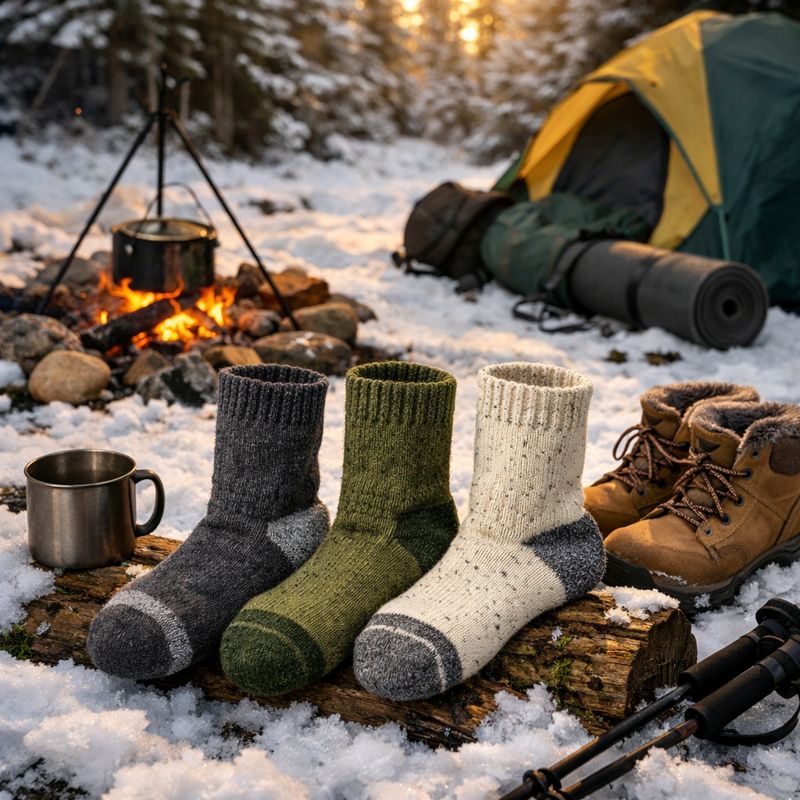
Cold weather camping has a funny way of humbling you. You can have the right tent, a decent sleeping bag, even a “warm” jacket… and still end up lying awake because your feet feel like two frozen water bottles. 😅
If you’re shopping smart (and not trying to spend $25–$35 per pair), the good news is: Best Camping Socks for Cold Weather on a Budget isn’t a fantasy. You just need to know what actually matters—materials, thickness, fit, and how socks work with your boots or sleep system.
In this guide, I’ll break down what to look for, what to avoid, and which budget-friendly socks are actually worth packing.
Table of Contents
- My quick cold-feet lesson (the mistake I made)
- What makes socks warm in the cold (it’s not just “thickness”)
- Best Camping Socks for Cold Weather on a Budget: quick buying checklist
- Materials that work (and the ones that don’t)
- How many pairs should you pack?
- Best Camping Socks for Cold Weather on a Budget: product reviews
- Comparison Table
- How to keep your feet warmer at camp (even with cheap socks)
- Common sock mistakes that make you colder
- Summary: what I’d buy if I was starting over
My quick cold-feet lesson (the mistake I made)
The first time I really camped in cold weather on a budget, I did what a lot of people do: I wore two pairs of socksbecause “more must be warmer,” right?
Wrong.
By midnight my toes felt numb, and I kept wiggling them like I was trying to start a fire with my feet. The issue wasn’t the temperature—it was that the double socks made my boots tighter, which restricted circulation. Less blood flow = colder feet, every time.
The next trip, I switched to one pair of thicker socks that actually fit, plus a dry “sleep pair” I never walked around in. I slept way better… and honestly felt a little silly for not realizing it sooner. 🏕️
What makes socks warm in the cold (it’s not just “thickness”)
Warm socks aren’t magic. They work by trapping warm air, managing moisture, and not cutting off circulation.
Here’s what really matters:
- Fit: Warm socks shouldn’t squeeze. If your toes feel “packed,” you’ll get cold faster.
- Moisture control: Damp feet lose heat quickly. Socks that manage sweat win.
- Cushion + loft: The fluffy “loft” creates tiny air pockets that hold warmth.
- Seam comfort: Toe seams can irritate and make you shift around at night (and that can feel colder).
- Boot compatibility: If thick socks make boots tight, you lose warmth.
A quick truth: the “warmest sock” is useless if it makes your boot fit worse.
Best Camping Socks for Cold Weather on a Budget: quick buying checklist
When you’re trying to get Best Camping Socks for Cold Weather on a Budget, this is the simple checklist I use:
- Choose wool blend when possible (even cheap wool blend beats pure cotton)
- Get at least one thicker “camp/sleep” pair
- Bring a dry pair only for sleeping
- Avoid cotton as your main cold-weather sock
- Make sure boots still fit comfortably
If you do only one thing: size your footwear for cold-weather socks. That alone saves a lot of misery.
Materials that work (and the ones that don’t)
Wool (and wool blends)
Wool is popular for a reason:
- Stays warm even when slightly damp
- Manages odor better than synthetics
- Feels cozy at camp
Budget tip: you don’t need 80% merino to benefit. Even 30–60% wool blends can work well for cold camping.
Synthetic (polyester/nylon blends)
Synthetic socks can be surprisingly solid:
- Durable
- Often cheaper
- Dry faster
Downside: sometimes they can feel “clammy” if your feet sweat a lot. Not always, but it happens.
Cotton (avoid for cold camping)
Cotton holds moisture and dries slowly. If your feet sweat or you step in wet grass, cotton can turn into a cold sponge.
If you’re car camping in mild conditions, cotton isn’t the end of the world… but for actual cold nights? I wouldn’t.
How many pairs should you pack?
For a weekend cold-weather trip, I like:
- 1 pair hiking socks (the pair you’ll sweat in)
- 1 backup dry pair
- 1 sleep-only pair (never walk around camp in them)
That “sleep pair” is a cheat code. Even budget socks feel premium when they’re bone dry. 🔥
Best Camping Socks for Cold Weather on a Budget: product reviews
Below are budget-friendly options that tend to be easy to find on Amazon and big retailers. Prices shift a lot, so I’ll give typical price ranges rather than pretending I know today’s exact listing price.
1) Dickies Men’s Dri-Tech Crew Socks (Multipack)

Typical price range: Budget multipack range
Materials: Usually polyester/cotton blend with a bit of spandex (varies by model)
Weight: Light-to-midweight
Size: Crew height, multipack
My take:
These are the kind of socks I throw in a bag when I need “good enough” without thinking too hard. The warmth isn’t insane, but they’re comfortable, and the value is hard to argue with if you need multiple pairs.
The little quirk I noticed:
They feel warmer than they should… until your feet get sweaty. Then you’ll wish you had a wool blend.
Pros
- Cheap per pair (easy to build a sock rotation)
- Comfortable for general use
- Usually easy to find locally too
Cons
- Not the best for damp cold
- Not as warm as true hiking socks
- Cotton content (if present) can hold moisture
Best for
- Mild cold, car camping, short trips
- People who want a multipack to rotate through
- Backup socks, not your “hero” pair
2) Columbia Thermal Crew Socks

Typical price range: Budget-to-mid budget
Materials: Often acrylic/poly blends (check listing)
Weight: Midweight, “thermal” feel
Size: Crew
My take:
These tend to feel warmer than standard everyday socks because they’re built for colder casual wear. They’re not true backpacking socks, but for budget campers, they’re a real step up from thin cotton crews.
Personal observation:
They’re cozy… like “winter morning in a house with tiled floors” cozy. But in tight boots, they can bunch a little.
Pros
- Noticeably warmer than basic socks
- Comfortable cushion
- Good for camp lounging
Cons
- Not always the best at moisture management
- Can feel bulky in snug footwear
- Durability varies by model
Best for
- Car camping and campfire nights
- People who want warmth without buying premium hiking socks
3) Wigwam Hiking Socks (Value Lines / Basic Hiker Styles)

Typical price range: Mid budget (often cheaper than premium merino brands)
Materials: Many Wigwam hikers use wool blends (varies)
Weight: Midweight hiking sock
Size: Crew
My take:
Wigwam is one of those brands that often punches above its price when you catch the right model. If you can get a wool blend in a reasonable range, it’s a strong “budget-smart” buy.
The small detail I like:
The cushioning tends to land where your foot actually takes pressure (heel/ball), instead of being randomly thick everywhere.
Pros
- Wool blend options available
- Better hiking performance than casual “thermal” socks
- Usually more supportive fit
Cons
- Prices jump around depending on the model
- Some styles feel scratchier than merino-heavy socks
Best for
- Cold hiking + camping on a budget
- Anyone who wants fewer pairs, but better performance
4) Danish Endurance Merino Wool Hiking Socks (Budget Merino Blend)

Typical price range: Mid budget multipack
Materials: Merino wool blend (varies by model)
Weight: Midweight
Size: Crew
My take:
These are often a sweet spot for people who want merino benefits without paying premium-brand prices. The warmth-to-cost ratio is usually solid, and they tend to handle odor well on multi-day trips.
My personal quirk note:
The first wear sometimes feels slightly “tight” around the arch, then breaks in nicely. If you’re between sizes, I’d lean toward comfort.
Pros
- Merino blend warmth and comfort
- Better moisture handling than cotton blends
- Often sold in multipacks
Cons
- Not as plush as top-tier merino socks
- Some people find the elastic a bit snug
Best for
- Budget hikers who still want merino benefits
- Cold sleepers who want a dedicated sleep sock
5) Fox River Wool Blend Socks (Budget-Friendly Wool Mix)

Typical price range: Mid budget
Materials: Wool blend (varies)
Weight: Mid-to-heavy depending on style
Size: Crew
My take:
Fox River has been around forever, and some of their wool blend socks are genuinely great for cold weather camping. You’re not paying for hype—just a functional sock that’s usually warm and tough.
Small observation:
Some styles are thick enough that they can change how your boots fit. That’s not a flaw, just something to plan for.
Pros
- Warm wool blends
- Often durable for repeated use
- Good insulation for camp
Cons
- Can feel bulky
- Some styles aren’t as “soft” as merino-heavy socks
Best for
- Cold nights at camp
- People who wear boots with a little extra room
6) Carhartt Cold Weather Crew Socks (Workwear Warmth)

Typical price range: Mid budget
Materials: Usually acrylic/wool blends depending on style
Weight: Mid-to-heavy
Size: Crew
My take:
Workwear socks can be underrated for camping. Carhartt socks often feel built for long days on your feet in rough conditions, which translates pretty well to cold camp mornings and chilly hikes.
The human detail:
They’re the socks I’d wear when I know I’ll be doing camp chores—gathering wood, moving gear, walking around on cold ground—because they feel sturdy.
Pros
- Tough, durable feel
- Warmth that holds up outdoors
- Good cushioning
Cons
- Some styles can feel a bit stiff at first
- Not always the lightest option
Best for
- Camp chores, cold mornings, rugged use
- People who like a “work sock” feel
Comparison Table
| Sock Option | Typical Price Range | Weight | Materials (Typical) | Best Use Case | Notable Pros |
|---|---|---|---|---|---|
| Dickies Dri-Tech Crew | Budget multipack | Light–Mid | Poly/cotton blend | Mild cold, backups | Great value, comfy |
| Columbia Thermal Crew | Budget–Mid | Mid | Acrylic/poly blend | Car camping, lounging | Cozy warmth |
| Wigwam Hiking Socks | Mid budget | Mid | Wool blend (varies) | Hiking + camping | Supportive cushion |
| Danish Endurance Merino | Mid budget multipack | Mid | Merino blend | Multi-day, sleep pair | Moisture + odor control |
| Fox River Wool Blend | Mid budget | Mid–Heavy | Wool blend (varies) | Cold camp nights | Warm + durable |
| Carhartt Cold Weather Crew | Mid budget | Mid–Heavy | Acrylic/wool blend | Rugged camp use | Tough, warm feel |
How to keep your feet warmer at camp (even with cheap socks)
This is where you can “outsmart” the cold without spending more.
1) Always have dry socks for sleeping 😌
Your sleep socks should be sacred.
No walking around camp. No “just a quick pee break” on wet grass.
2) Loosen your laces at camp
If your boots are snug, loosen them. Circulation matters more than people realize.
3) Use a vapor barrier trick (simple version)
If your feet get damp in cold conditions, you can put a thin plastic bag between a liner sock and an outer sock in emergencies. It sounds weird, but it slows heat loss.
Not comfy for hiking long distances, but for cold camp situations? It works.
4) Warm your feet before bed
Cold feet don’t magically heat up inside a sleeping bag.
Do 30–60 seconds of:
- calf raises
- brisk pacing around camp
- a few bodyweight squats
Then get into bed while your circulation is already moving.
5) Don’t forget your sleep system matters
If the ground is cold, your feet can feel cold even with good socks.
If you haven’t yet, check out Best Sleeping Bags Under $50 for Cold Weather for budget sleeping setups that actually keep warmth in overnight, especially when temps dip.
And if you’re still waking up cold from below, best sleeping pads under $30 is worth a look too—your socks can’t fix heat loss through a thin pad.
Common sock mistakes that make you colder
Wearing two socks that make boots tight
More layers can mean less circulation. One good pair wins.
Sleeping in the socks you hiked in
Even if they “don’t feel wet,” they usually are. Your feet sweat.
Choosing socks based on “thick = warm”
Some thick socks are warm. Some are just bulky. Materials matter.
Ignoring toe seams
A toe seam that rubs can keep you awake and make you shift around, which feels colder over time.
Not rotating pairs
Cold camping isn’t the time to be stubborn. Rotate socks, keep them dry, and your feet will thank you.
Summary: what I’d buy if I was starting over
If I was building a cold-weather sock setup on a budget from scratch, I’d do this:
- 1 pair wool blend hikers (Wigwam / Fox River style) for active use
- 1 dedicated merino-blend sleep pair (Danish Endurance-style)
- 1 cheaper multipack pair (Dickies-style) for backups or mild conditions
That combo covers you for hiking, camp chores, and sleeping—without spending premium-sock money.
If you’re considering upgrading just one thing for cold trips, make it the sleep socks first. This is especially worth it if you’ve ever laid there at 2 a.m. with cold toes, staring into the darkness like, “yup… I messed up.” 😅
Post Disclaimer
This site contains affiliate links (including Amazon) and uses Google AdSense. Purchases through links may earn a commission at no extra cost to you. Ads may be personalized.