
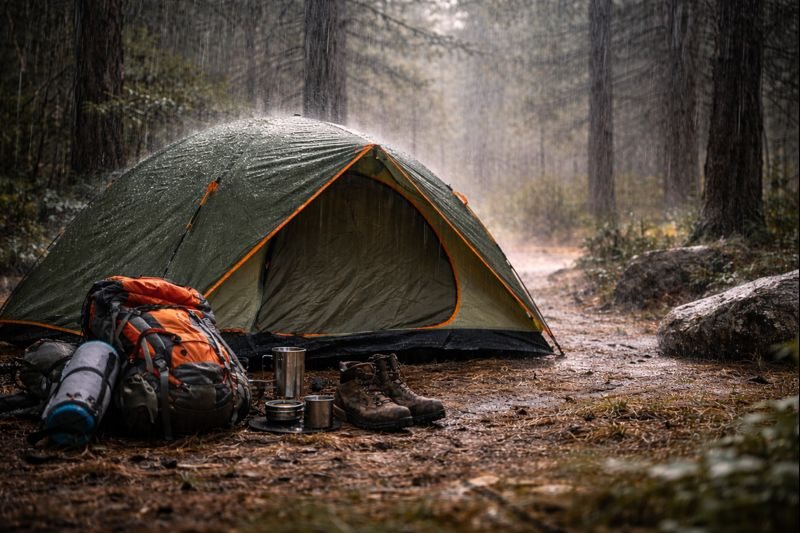
Can you camp in the rain without a tarp?
Short answer: yes, sometimes — but it depends heavily on your setup, the rain itself, and a few details that most people don’t think about until they’re already soaked.
I’ve camped through light drizzle, steady all-night rain, and one miserable storm where water crept in from places I didn’t even know existed. Over time, I learned when skipping a tarp is totally fine… and when it’s a mistake you’ll only make once 🌧️🏕️.
This guide breaks it all down honestly, especially if you’re camping on a budget and trying not to carry extra gear you don’t really need.
🌧️ Camping in the Rain Without a Tarp — Is It Realistic?
| Situation | No Tarp Needed? | Why |
|---|---|---|
| Light rain (short duration) | ✅ Yes | A well-pitched tent with a full rainfly can usually handle this |
| Moderate rain overnight | ⚠️ Maybe | Works if drainage is good and wind stays calm |
| Heavy rain or thunderstorms | ❌ No | Wind-driven rain and ground runoff become serious problems |
| Multi-day rain | ❌ No | Managing wet gear without covered space gets difficult fast |
| Well-drained campsite | ✅ Yes | Water flows away instead of pooling under your shelter |
| Low-lying or muddy ground | ❌ No | Water will collect and seep underneath |
Table of Contents
- Can You Camp in The Rain Without a Tarp? (Quick Answer)
- My First Rainy Camp Without a Tarp
- When You Can Camp in The Rain Without a Tarp
- When You Absolutely Should Not Skip a Tarp
- Can You Camp in The Rain Without a Tarp Using a Tent?
- Ground Conditions Matter More Than You Think
- Tarp Alternatives That Still Work
- Tent vs Hammock in Rainy Conditions
- Practical Tips to Stay Dry Without a Tarp
- Final Thoughts
Can You Camp in The Rain Without a Tarp? (Quick Answer)
Yes, you can camp in the rain without a tarp, if you’re using a properly designed tent, the ground drains well, and the rain isn’t severe or prolonged.
However, camping without a tarp becomes risky when:
- Rain is heavy or persistent
- Wind is involved
- Ground runoff is possible
- You need a dry space outside your tent
A tarp isn’t always essential, but it’s often the difference between a tolerable night and a long, damp one.

My First Rainy Camp Without a Tarp
The first time I camped in steady rain without a tarp, I thought I’d figured out a clever weight-saving trick. My tent had a full rainfly, sealed seams, and a decent reputation. What could go wrong?
Well… condensation built up fast, my boots sat outside getting soaked, and I had nowhere dry to cook or reorganize gear. Nothing catastrophic happened, but by morning everything felt clammy and half-wet. It worked — but barely.
That trip taught me that staying dry isn’t just about sleeping. It’s about everything that happens before and after you crawl into the tent.
When You Can Camp in The Rain Without a Tarp
There are situations where skipping a tarp makes sense.
You can camp in the rain without a tarp if:
- You have a quality tent with a full rainfly
- The rain is light to moderate
- The campsite has good drainage
- You’re only staying one night
- You don’t plan on cooking or hanging out outside
In these cases, a tent alone can handle the job just fine. Modern tent designs are surprisingly capable, especially compared to older budget models.
When You Absolutely Should Not Skip a Tarp
This is where people usually learn the hard way.
You should not camp in the rain without a tarp when:
- Rain is forecast for multiple hours or days
- Wind is strong enough to push rain sideways
- You’re camping in low-lying or muddy areas
- You need a dry place to cook, change, or store gear
Without a tarp, rain tends to sneak in during transitions — entering the tent, removing wet clothes, or managing gear. That’s usually when things go downhill.
You don’t need to spend a fortune on a good tarp, I have a review of the current best camping tarps under $30 here.
Can You Camp in The Rain Without a Tarp Using a Tent?
This is the most common scenario, and the answer is still yes — but with conditions.
A good tent should have:
- A full coverage rainfly
- Properly tensioned guylines
- A bathtub-style floor
- Adequate ventilation
Even then, tents aren’t magic. Wind-driven rain and condensation can still cause issues, especially if airflow is poor.
One thing I’ve noticed is that cheaper tents often fail at the edges — rain splashing up from the ground or pooling underneath. A tarp or footprint helps a lot here, even if it’s minimal.
Ground Conditions Matter More Than You Think
You can have the best tent in the world and still wake up wet if the ground is wrong.
Watch out for:
- Slight dips that collect water
- Hard-packed soil that doesn’t absorb rain
- Areas near roots or rocks where water funnels
Before setting up, I always take a minute to imagine where rainwater will flow. It sounds silly, but it’s saved me more than once.
Tarp Alternatives That Still Work
If you don’t want to carry a full tarp, there are a few lighter compromises.
- Tent footprint or groundsheet
- Poncho used as partial cover
- Emergency bivy or space blanket (last resort)
These won’t replace a tarp completely, but they can reduce splash-back and ground moisture.
Tent vs Hammock in Rainy Conditions
Rain is also where shelter choice really matters. I’ve gone back and forth between setups over the years, and each handles rain differently.
If you’re still deciding between systems, I break down the pros and cons in more detail in Hammock vs Tent for Budget Camping. It’s especially helpful if you’re trying to stay dry without carrying extra gear you don’t need.
Practical Tips to Stay Dry Without a Tarp
If you’re committed to camping without a tarp, these small habits help a lot:
- Pitch your tent before rain starts
- Keep wet gear outside in bags
- Vent the tent even when it’s raining
- Change clothes quickly and deliberately
- Accept that a little dampness is normal
Trying to keep everything perfectly dry usually backfires. Focus on staying comfortable, not bone-dry.
Final Thoughts
So, can you camp in the rain without a tarp?
Yes — but it’s situational, and it’s not always comfortable.
For short trips, mild weather, and good campsites, a tarp is optional. For longer stays, unpredictable storms, or budget gear, a tarp is cheap insurance against a miserable night.
If you’re considering skipping one, this is especially worth thinking through before the rain starts. Learning this lesson dry is a lot nicer than learning it soaked 😅🌲.
Post Disclaimer
This site contains affiliate links (including Amazon) and uses Google AdSense. Purchases through links may earn a commission at no extra cost to you. Ads may be personalized.