
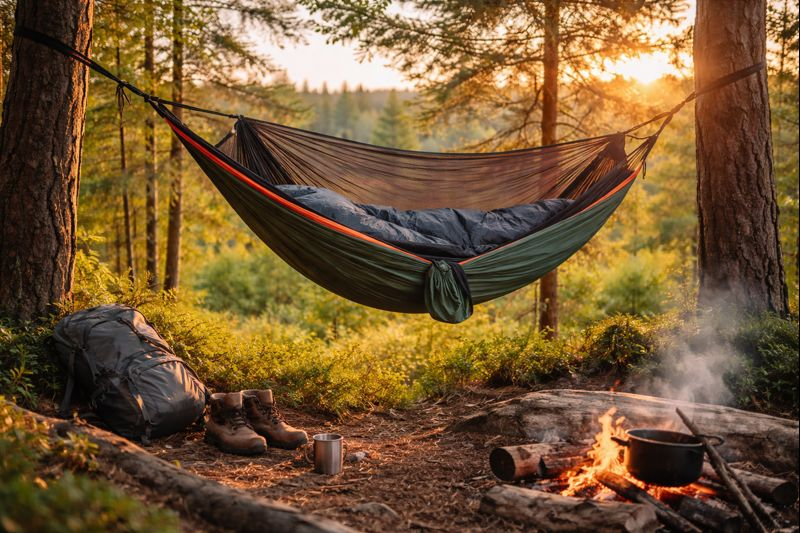
Hammock camping for beginners can feel a little intimidating at first. I remember staring at two trees, straps in hand, wondering if I was about to nap like a pro… or end up cocooned like a burrito on the forest floor. 😅 The good news? Once you understand the basics, hammock camping becomes one of the most comfortable, lightweight, and downright fun ways to sleep outdoors.
In this guide, I’ll walk you through everything I wish someone told me early on—from choosing the right hammock to staying warm, dry, and comfortable all night. If you’ve ever been curious about ditching the tent and sleeping between the trees, you’re in the right place.
Table of Contents
- What is hammock camping?
- Why hammock camping for beginners is easier than you think
- My first hammock camping mistake (and what it taught me)
- Essential gear you actually need
- Hammock camping for beginners: choosing the right hammock
- Sleeping warm and dry in a hammock
- Beginner-friendly hammock setup tips
- Common mistakes (and how to avoid them)
- Top beginner hammock picks (detailed reviews)
- Hammock vs tent: which should you try first?
- Final thoughts
What is hammock camping?
At its core, hammock camping means sleeping suspended between two anchor points—usually trees—instead of on the ground. Unlike backyard hammocks, camping hammocks are designed to support your full body overnight, often paired with bug nets, rain tarps, and insulation.
For beginners, this style of camping can feel surprisingly freeing. Not any rocks in your back. No uneven ground. No waking up feeling like you wrestled a tree root all night.
Why hammock camping for beginners is easier than you think 🌄
A lot of people assume hammock camping is “advanced.” In reality, hammock camping for beginners is often simpler than tent camping.
Here’s why:
- Less ground prep – No clearing rocks or leveling soil
- Faster setup – Two straps, clip, adjust, done
- Lighter packs – Hammocks usually weigh less than tents
- Better sleep – Once dialed in, pressure points nearly disappear
I was skeptical at first, but after a few nights, it honestly spoiled ground sleeping for me.
My first hammock camping mistake (and what it taught me)
My very first overnight hang was… cold. Like, teeth-chattering-at-2am cold. I had a sleeping bag and thought I was set. Turns out, cold air underneath you doesn’t care how cozy your bag is.
That night taught me one big lesson: insulation matters more in a hammock than on the ground. Once I fixed that, everything clicked. Comfort went from “why am I doing this?” to “I might never bring a tent again.”
Essential gear you actually need 🎒
You don’t need a truckload of gear to start hammock camping, but a few items are non-negotiable.
Core hammock camping setup
- Camping hammock (with suspension straps)
- Tree-friendly straps (wide enough not to damage bark)
- Bug net (if not built-in)
- Rain tarp
- Insulation (underquilt or pad)
Optional but helpful:
- Ridgeline organizer
- Small pillow or stuff sack pillow
- Headlamp for nighttime adjustments
Hammock camping for beginners: choosing the right hammock 🪢
This is where many beginners overthink things. Don’t. Focus on comfort, size, and ease of use.
Look for:
- Length: 10.5–11 feet is ideal for most adults
- Width: Wider hammocks allow a flatter diagonal lay
- Weight rating: Aim well above your body weight
- Integrated bug net: One less thing to fuss with
Avoid ultra-cheap hammocks with thin fabric and sketchy stitching. Saving a few dollars isn’t worth waking up on the ground at 3am.
Sleeping warm and dry in a hammock 🌧️🔥
You want to stay comfortable overnight, this is what makes or breaks hammock camping for beginners.
Staying warm
- Use an underquilt for cold or windy conditions
- In mild weather, a foam or inflatable sleeping pad can work
- Wear dry base layers before bed (huge difference)
Staying dry
- Pitch your tarp low and angled in heavy rain
- Make sure your tarp extends past both ends of the hammock
- Check wind direction before setting up
Once you dial this in, rain nights become oddly relaxing.
Beginner-friendly hammock setup tips 🌲
- Hang straps about head height
- Aim for a 30-degree angle on suspension lines
- Sit height should be chair-level when weighted
- Lie diagonally, not straight
That diagonal lay is the secret sauce. The first time I got it right, I remember thinking, “Oh… this is why people love hammocks.”
Common mistakes (and how to avoid them)
- Hanging too tight – Leads to shoulder squeeze
- Skipping insulation – Cold air = miserable night
- Trees too far apart – Makes setup awkward
- Cheap straps – Stretching ruins comfort
Mistakes happen. The nice part? Hammock camping has a fast learning curve.
Top beginner hammock picks (tested and beginner-friendly) ⭐
Below are three hammocks I often recommend to people just starting out. I’ve either used them personally or spent way too much time inspecting them on trips.
ENO DoubleNest Hammock

Best for: Casual campers and beginners who want simplicity
What it costs lately: Roughly what you’d spend on a nice dinner for two
Specs
- Material: FreeWave nylon
- Weight: ~19 oz
- Capacity: 400 lbs
- Packed size: Grapefruit-sized
Pros
- Extremely durable fabric that feels forgiving
- Roomy enough to move around without feeling cramped
- Super fast setup with ENO straps
Cons
- No built-in bug net
- Needs accessories for overnight use
Personal take: This was one of the first hammocks I ever lounged in. It’s bombproof, and while it needs add-ons for camping, it’s hard to beat for reliability.
Kammok Roo Double Hammock

Best for: Beginners who want premium comfort and durability
What it usually goes for: Mid-range, but feels more upscale than the price
Specs
- Material: Diamond Ripstop nylon
- Weight: ~16 oz
- Capacity: 500 lbs
- Length: 10 ft
Pros
- Fabric feels softer and more supportive
- Excellent stitching and craftsmanship
- Handles heavier loads with ease
Cons
- Straps sold separately
- Slightly heavier than ultralight options
Personal quirk: The fabric has just enough stretch to feel cozy without sagging. I noticed fewer pressure points compared to cheaper hammocks.
Wise Owl Outfitters Camping Hammock

Best for: True beginners on a tighter budget
What it costs now: About the price of a tank of gas
Specs
- Material: 210T parachute nylon
- Weight: ~24 oz (with straps)
- Capacity: 400 lbs
- Includes straps and carabiners
Pros
- Excellent value for first-time users
- Comes with everything needed to hang
- Surprisingly durable for the cost
Cons
- Fabric isn’t as breathable
- Slightly bulkier packed size
Personal note: This is one I often suggest to friends “just trying it out.” It’s not fancy, but it gets people hooked.
Comparison table: beginner hammocks at a glance
| Hammock | Weight | Capacity | Best Use |
|---|---|---|---|
| ENO DoubleNest | 19 oz | 400 lbs | Lounging + camping |
| Kammok Roo Double | 16 oz | 500 lbs | Comfort-focused campers |
| Wise Owl Outfitters | 24 oz | 400 lbs | Budget beginners |
Hammock vs tent: which should you try first? ⛺
If you’re still undecided, I’d suggest reading my deeper breakdown on the tradeoffs in Hammock vs Tent for Budget Camping: Which is Better?. I wrote it after bouncing back and forth between both styles and realizing each shines in different situations. It’s especially helpful if you camp in mixed terrain or on a tighter budget.
Final thoughts 🌙
Hammock camping for beginners doesn’t require perfection—just a willingness to learn a few basics and adjust as you go. Once you get past that first night or two, the comfort and simplicity are hard to ignore.
If you’re considering trying hammock camping, it’s especially worth it if you value lightweight gear, better sleep, and campsites that don’t rely on perfect ground. Start simple, stay curious, and don’t be surprised if your tent starts collecting dust.
Post Disclaimer
This site contains affiliate links (including Amazon) and uses Google AdSense. Purchases through links may earn a commission at no extra cost to you. Ads may be personalized.