
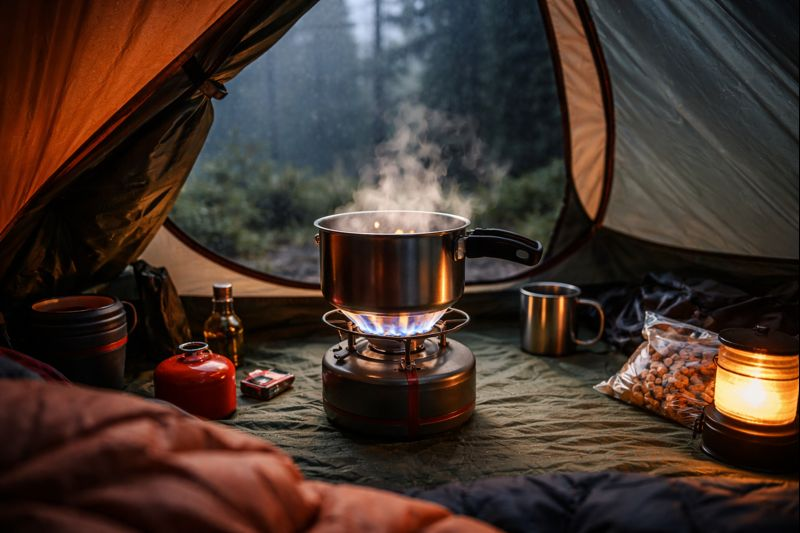
Short answer? No — using a camping stove inside a tent is not safe.
Long answer? It’s a bit more nuanced, and that nuance matters when you’re cold, tired, or camped out in rough weather.
This is one of those questions almost every camper asks at least once. I sure did. When the rain is sideways, the wind is howling, and your fingers feel like frozen sausages, the idea of firing up a stove just for a minute inside the tent can sound… reasonable.
But there are real risks here, and they’re not hypothetical. Let’s walk through what actually happens, why people still try it, and what safer alternatives exist so you can stay warm without gambling your life.
🔥⛺️
Table of Contents
- Why This Question Comes Up So Often
- The Real Dangers of Using a Stove in a Tent
- My Personal Close Call (Learned the Hard Way)
- Carbon Monoxide: The Silent Risk
- Fire Hazards Most People Don’t Consider
- Ventilation Myths That Get Campers Hurt
- Are Any Camping Stoves Safe in a Tent?
- Common Stove Types People Try Indoors (And Why They’re Still Risky)
- Comparison Table: Stove Types vs Indoor Risk
- What Experienced Campers Do Instead
- Safer Ways to Cook When Weather Is Awful
- Final Verdict: Should You Ever Do It?
- Quick Summary & Final Thoughts
Why This Question Comes Up So Often
Within the first 100 words, let’s be clear: Can you use a camping stove inside a tent safely?
It’s a question driven by discomfort, not ignorance.
Most people ask it when:
- It’s raining nonstop 🌧️
- Wind keeps blowing out their stove 💨
- Temperatures drop fast after dark ❄️
- They’re exhausted and just want a hot meal
On paper, a tent feels like shelter. In reality, it’s a thin layer of nylon that traps danger just as easily as it traps warmth.
The Real Dangers of Using a Stove in a Tent
Let’s break down the risks without fear-mongering, just facts.
1. Carbon Monoxide Poisoning ☠️
Camping stoves burn fuel. Burning fuel produces carbon monoxide (CO). CO is:
- Colorless
- Odorless
- Deadly in small concentrations
Inside a tent, CO can build up shockingly fast, even with vents open.
2. Fire Risk 🔥
Tents are made from flammable materials:
- Nylon
- Polyester
- Silicone coatings
One accidental flare-up, tipped pot, or fabric brushing a flame and the tent can go up in seconds. You won’t have time to react.
3. Oxygen Depletion 😮💨
Even before CO becomes deadly, stoves consume oxygen. In enclosed spaces, this can cause:
- Dizziness
- Headaches
- Confusion
- Panic
Not exactly ideal when holding boiling water.
My Personal Close Call (Learned the Hard Way)
Years ago, on a soggy solo trip, I thought I’d outsmart the risk.
I cracked the vestibule, kept the stove low, and figured I’d just boil water fast. About two minutes in, I felt oddly lightheaded. Nothing dramatic—just off. I shut the stove down and stepped outside.
Ten minutes later, my headache kicked in hard.
That was enough for me. No hot meal is worth that feeling, and honestly, it scared me more than I like to admit.
Carbon Monoxide: The Silent Risk You Can’t Detect
Here’s what makes CO especially dangerous in tents:
- You can’t smell it
- You can’t see it
- You often feel sleepy before symptoms escalate
By the time you realize something’s wrong, your reaction time is already impaired. That’s how accidents turn fatal.
Even stoves marketed as “clean burning” still produce CO. There is no such thing as zero CO combustion.
Fire Hazards Most People Don’t Consider
It’s not just the flame.
Other risks include:
- Melting tent fabric dripping onto skin
- Pressurized fuel canisters overheating
- Pots tipping on uneven ground
- Stove legs puncturing tent floors
One gust of wind sneaking through a vent can change everything fast.
Ventilation Myths That Get Campers Hurt
A common argument is:
“I’ll just open the door a bit.”
Here’s the problem:
- Tents don’t ventilate like rooms
- Air exchange is unpredictable
- CO can pool low or high depending on conditions
Cracking a zipper is not real ventilation. It only creates a false sense of safety.
Are Any Camping Stoves Safe in a Tent?
This is where things get tricky.
No portable camping stove is designed to be used inside a tent.
Period.
Some people confuse “can be used indoors” with “safe in a tent”. Those are not the same thing.
Even stoves labeled for indoor emergency use assume:
- Solid walls
- High ceilings
- Open airflow
- Fire-resistant surroundings
A tent has none of those.
Common Stove Types People Try Indoors (And Why They’re Still Risky)
That said, these are the stoves people most often try using inside tents. Let’s talk honestly about them.
🔹 Canister Gas Stoves (Isobutane/Propane)
Average cost: around $25–$45
Materials: stainless steel, aluminum
Weight: ~3–4 oz
Size: palm-sized
Pros
- Fast boil times
- Easy flame control
- Lightweight
Cons
- Produces carbon monoxide
- Open flame close to fabric
- Canisters can overheat
Best for: Outdoor cooking only, well away from shelters
Personal note: Super convenient, but I never trust them near nylon.
🔹 Alcohol Stoves
Average cost: roughly $15–$30
Materials: aluminum or brass
Weight: ~1–2 oz
Pros
- Quiet operation
- Simple design
- Cheap fuel
Cons
- Invisible flame
- Easy to knock over
- Still produces CO
Best for: Ultralight outdoor setups
Quirk: I once didn’t realize it was still lit… that’s a bad moment.
🔹 Solid Fuel (Esbit-Style) Stoves
Average cost: about $10–$25
Materials: steel or titanium
Weight: ~2–3 oz
Pros
- No pressurized fuel
- Compact
- Simple
Cons
- Toxic fumes
- Sticky residue
- Hard to extinguish quickly
Best for: Emergency outdoor cooking
Observation: The smell alone inside a tent would be awful.
Comparison Table: Stove Types vs Indoor Risk
| Stove Type | CO Risk | Fire Risk | Tent-Safe? |
|---|---|---|---|
| Canister Gas | High | High | ❌ No |
| Alcohol | Moderate | High | ❌ No |
| Solid Fuel | Moderate | Moderate | ❌ No |
| Any Stove | Varies | High | ❌ Still No |
What Experienced Campers Do Instead
This is where real-world wisdom kicks in.
Instead of cooking inside tents, seasoned campers usually:
- Cook under a tarp or awning 🌲
- Use the tent vestibule without entering the tent
- Cook early before weather worsens
- Pre-cook meals at home and reheat safely
If you’re still choosing gear, it helps to understand which budget stoves handle wind and bad weather better — I break that down in detail in [Best Budget Camping Stove Under $50], especially useful if you’re trying to cook efficiently outside without frustration.
Safer Ways to Cook When Weather Is Awful
Here are smarter alternatives that don’t put you at risk:
✅ Use a Tarp Setup

A simple tarp blocks wind and rain while staying open on all sides.
✅ Cook in the Vestibule (With Caution)
- Stove stays fully outside
- You remain inside
- Plenty of airflow
✅ Eat No-Cook or Quick-Boil Meals
Sometimes cold food is the safer call. Not fun, but safe.
✅ Insulated Meals
Boil water outside, then pour into an insulated container inside.
Final Verdict: Should You Ever Do It?
Let’s be crystal clear.
Can you use a camping stove inside a tent safely?
No. Not safely. Not responsibly.
Even experienced campers who’ve “done it before” are relying on luck, not safety. And luck runs out eventually.
Quick Summary & Final Thoughts
- Camping stoves produce carbon monoxide
- Tents trap fumes and heat
- Ventilation myths are dangerous
- No stove is designed for tent interiors
- Safer alternatives exist and work well
If you’re considering cooking in bad weather, it’s worth adjusting your setup rather than taking the risk. A little planning goes a long way, especially when conditions turn rough.
Stay warm, stay fed — and most importantly, stay safe out there. 🌲🔥
Post Disclaimer
This site contains affiliate links (including Amazon) and uses Google AdSense. Purchases through links may earn a commission at no extra cost to you. Ads may be personalized.