
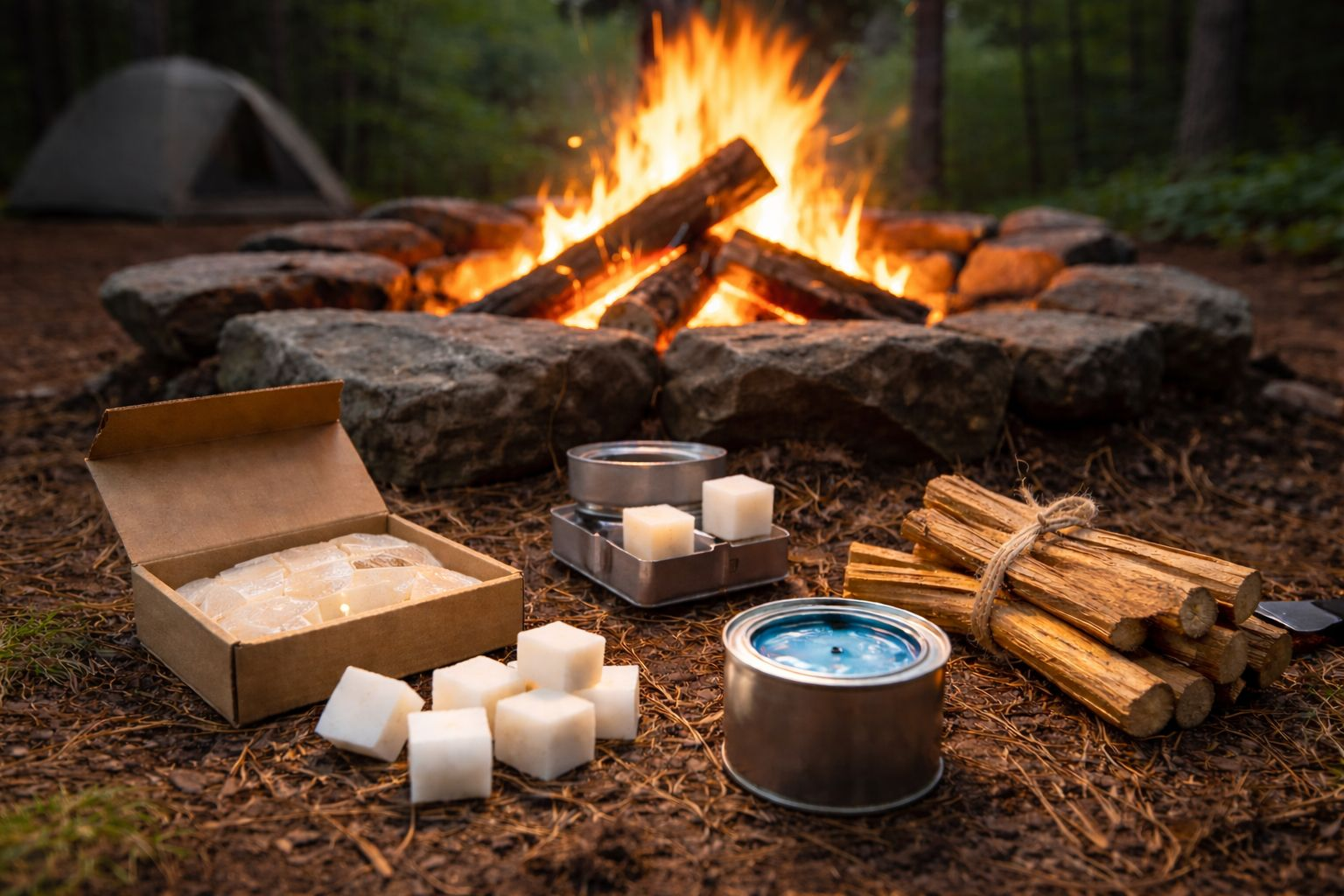
If you’ve ever stood at camp staring at a pile of soaked logs that refuse to light, you already know the frustration. Finding the Best firewood substitutes if wood is wet can save your night, your meal, and honestly, your mood. I’ve been there—rain coming sideways, hands cold, matches dwindling—and learning which alternatives actually work changed how I camp for good.
In this guide, I’ll break down reliable options that burn even when nature isn’t cooperating. I’ll also share what worked (and what didn’t) from my own trips, plus practical pros, cons, and real-world quirks. If wet logs are your problem, this is your fix.
Table of Contents
- Why wet firewood fails so badly
- My soggy-campfire lesson (and what I learned)
- Best firewood substitutes if wood is wet (quick overview)
- Commercial fire starters that actually work
- Natural and DIY substitutes you can find anywhere
- Best firewood substitutes if wood is wet for cooking vs warmth
- Comparison table: burn time, cost, smoke
- Safety tips when burning substitutes
- Final thoughts & gentle next steps
Why wet firewood fails so badly 🌧️
Wet wood doesn’t just burn poorly—it actively fights you.
When logs are soaked:
- Heat energy goes into evaporating water instead of making flames
- Smoke increases fast, which kills airflow
- You burn through tinder and patience way too quick
Even “seasoned” wood can absorb moisture after a single rainy night. That’s why knowing the Best firewood substitutes if wood is wet isn’t optional—it’s basic camp insurance.
My soggy-campfire lesson (learned the hard way)
A few years back, I assumed stacking wood under a tarp was enough. It rained overnight, hard. By morning, everything felt damp but looked okay. Big mistake.
I spent nearly an hour coaxing a sad, smoky flame before finally giving up and pulling out a backup fire starter cube I’d tossed in my bag last minute. It lit instantly. That moment rewired my brain: wet wood happens, but a failed fire doesn’t have to.
Since then, I always pack at least one reliable substitute.
Best firewood substitutes if wood is wet (quick overview)
Here’s what consistently works when logs won’t:
- Fire starter cubes (wax-based or biomass)
- Solid fuel tablets
- Gel fuel cans
- Dry scrap wood or construction offcuts
- Natural high-resin materials
Some are better for cooking, others for warmth, and a few do both surprisingly well.
Commercial fire starters that actually work 💪
Wax-based fire starter cubes
These are hands-down one of the most dependable options.
What they are:
Compressed wood fibers soaked in wax or plant-based oils.
Typical cost:
Usually around a few dollars for a pack of 20–24 cubes.
Specs
- Material: wood fiber + wax/oil
- Size: roughly 1–1.5 inch cubes (varies)
- Weight: very light; easy to stash in a zip bag
- Burn time: ~8–12 minutes each (typical)
Pros
- Long, steady burn
- Easy to pack and store
- Minimal skill required
Cons
- Can smell slightly waxy
- Not ideal as a standalone heat source
Best for:
Campers who just want fire now without drama.

Tiny personal quirk:
I’ve accidentally snapped one in half and both pieces still lit fine—nice little confidence boost.
Solid fuel tablets (hexamine-style)
These are compact and surprisingly powerful.
Typical cost:
Commonly under ten bucks for a multi-pack.
Specs
- Material: solid fuel compound
- Size: small tablet blocks
- Weight: ultralight
- Burn time: varies by tablet; often 10–15 minutes
Pros
- Extremely reliable ignition
- High heat output
- Lightweight and water-resistant packaging
Cons
- Chemical smell while burning
- Not great for campfire vibes or marshmallows
Best for:
Quick cooking when conditions are ugly.

Tiny personal note:
I keep these sealed until needed—the smell clings to gear if you’re careless.
Gel fuel cans
These don’t get talked about enough.
Typical cost:
Often around the price of a couple snacks per can.
Specs
- Material: alcohol-based gel
- Size: small metal can
- Weight: moderate for its burn time
- Burn time: often 1–3 hours depending on can
Pros
- Burns clean and steady
- Wind-resistant flame
- Easy to control
Cons
- Lower heat than a real wood bed
- Single-use containers (pack out trash)
Best for:
Simple cooking or emergency warmth.

Tiny personal quirk:
They’re oddly calming to watch burn—almost too tidy for a messy campsite.
Natural and DIY substitutes you can find anywhere 🌲
Fatwood (resin-rich pine)
This stuff is basically nature’s fire starter.
- Ignites fast
- Burns hot even when damp
- Naturally water-resistant because of the resin
Best use: shave thin curls as kindling, then add thicker sticks.
Dry scrap wood or offcuts (untreated only)
If you can access it safely (and legally), untreated dry scraps burn better than forest wood in rain.
Good examples:
- Pallet chunks (clean, not painted)
- Kiln-dried lumber offcuts
Avoid anything painted, glued, or pressure-treated.
Cardboard + wax combo (DIY at home)
If you prep at home:
- Egg cartons
- Melted candle wax
- Dryer lint or sawdust
Not elegant, but it works when you really need it.
Best firewood substitutes if wood is wet for cooking vs warmth 🍳🔥
Not all substitutes shine in the same role:
- For cooking: solid fuel tablets, gel fuel (more predictable heat)
- For warmth: wax cubes paired with damp wood (helps “bootstrap” a bigger fire)
- For both: fatwood curls plus a cube (fast ignition + stronger flame)
Also, if you’re planning for wet weather, it’s smart to think beyond just fire. I learned that the hard way after one stormy solo trip where my “fire plan” was solid but everything else was… not 😅. If you want a practical checklist that covers the other stuff that tends to go wrong at the same time, I recommend my older guide Emergency Essentials for Solo Campers (Budget Edition)—it pairs really well with this topic without overlapping it.
Comparison table: firewood substitute options
| Option | Best Use | Burn Time | Heat Output | Smoke | Ease |
|---|---|---|---|---|---|
| Wax starter cubes | Starting wet wood | Medium | Medium | Low | Very easy |
| Solid fuel tablets | Fast cooking | Short–Med | High | Medium | Easy |
| Gel fuel cans | Steady cooking/warmth | Long | Medium | Very low | Very easy |
| Fatwood | Reliable ignition | Medium | High | Medium | Moderate |
| DIY wax/cardboard | Budget backup | Medium | Medium | Medium | Moderate |
Safety tips when burning substitutes ⚠️
A few rules I stick to:
- Don’t use random accelerants (gasoline/kerosene = no)
- Keep chemical fuels sealed and separate from food
- Use a stable surface for tablets and gel cans
- Ventilate well; avoid inhaling smoke/fumes
- Let gel cans cool fully before moving them
Final thoughts ✅
Wet wood is annoying, but it doesn’t have to wreck your trip. Knowing the Best firewood substitutes if wood is wetmeans you stay warm, eat well, and sleep easier even when the forecast laughs at you.
If you’re considering upgrading your fire kit, this is especially worth it for rainy climates or shoulder-season camping. Pack one or two backups, and you’ll feel way more in control out there. 🔥
Post Disclaimer
This site contains affiliate links (including Amazon) and uses Google AdSense. Purchases through links may earn a commission at no extra cost to you. Ads may be personalized.